Why I Switched My Photography Workflow From Aftershoot To Narrative Select: Has aftershoot Become an AI Master of None?
I Didn't Start With Aftershoot. I Actually Started With Narrative.
In this post, I'm walking you through why I'm switching back to Narrative after using Aftershoot for culling and editing for two years. Narrative isn't new to me, though. Their culling software, Select, launched as Narrative Select in beta back in 2021, and that was the very first culling tool I ever used. In fact, Narrative offers a separate blogging software that I started using in 2019! Then in 2023, Aftershoot reached out. I tested it privately for almost a year before I ever recommended it publicly, because that's just how I operate; I don't recommend things I haven't lived with and genuinely loved. Eventually I became an Aftershoot partner and used their software for close to three years total.
So what changed? Why would I go back to Narrative after already climbing Aftershoot's learning curve? That's exactly what this post gets into: the real reasons I've brought Select back into my workflow, and why it's the better fit for my photography business now.
Is Aftershoot's AI Actually Accurate?
Aftershoot's culling AI is pretty accurate, and I'm not going to sit here and pretend otherwise just because I'm not using it anymore. You still have to double-check everything it gives you, though. I would not trust any software to select my images without reviewing them myself, and honestly, that's not even how Aftershoot is meant to be used in the first place. I would never tell you to blindly trust an automated cull.
However, here’s a simple example to show the difference between Narrative Select and Aftershoot. Say you're culling an engagement session, and there's a shot of the two of them mid-laugh, eyes scrunched closed, but it's clearly the best expression out of the whole gallery. Aftershoot's AI can flag that as a closed-eyes reject without understanding that a genuine laugh is exactly the kind of moment you actually want to keep. Narrative handles this part differently. Their eye assessments are built to tell the difference between eyes closed from blinking, laughing, a kiss, or someone glancing down, versus eyes that are genuinely closed in a way you'd want to reject. That's the kind of nuance that gets lost pretty easily once you hand a decision fully over to an AI.
But here's the thing I think gets lost in a lot of these conversations. Some photographers expect Aftershoot to just do everything for them. I've actually talked to people who don't review their culling results at all; they just let the AI's picks stand as the final gallery, and that is not how the software is meant to be used. Aftershoot's AI is genuinely good software. It is not, and I don't think it ever will be, a replacement for your own eye on something as emotionally loaded as a wedding gallery. As I said earlier, I don't think Aftershoot actually markets itself as a fully hands-off tool. But it's interesting to me that multiple photographers I've spoken with use it that way anyway.
Aftershoot vs. Narrative: Which One Actually Gives You More Creative Control?

Ok, I want to clear something up here because I think it gets oversimplified in a lot of these comparison posts, including some of the marketing from both of these companies. Both of these tools give you the same amount of creative control. Aftershoot’s process is that it runs in the background for you, making those selects for you. Narrative loads in all of your photos and has you review them all yourself. Then you can choose to view the different groupings, which are rated as green, yellow, and red. Some photographers might choose to only review the green grouping. I personally don’t use the grouping and just review all three together.
As long as you're actually reviewing what either program gives you, and you should be, you are the one making the final call every single time, in both pieces of software.
The real difference between the two programs isn't control. It comes down to how fast you get there and which path you'd rather take to arrive at the same result.
What’s the difference between Aftershoot culling & Narrative?
This is the part I actually think matters, so let me walk you through it the way I would if we were sitting down with coffee.
With Aftershoot, you import your folder, and the AI runs in the background and sorts your images into categories for you, things like highlights, duplicates, blurry shots, and closed eyes, all based on its own analysis. Once it's done doing its thing, you go in and review what it decided. You're essentially checking the AI's homework.
With Narrative, you import your images; they load almost instantly (we're talking a few seconds for full RAW files, no sitting around waiting on previews to render), and then you scroll through and review every single image yourself. The AI is right there giving you assessment info as you go in the form of focus scores, whether eyes are open or closed, whether there's a better frame nearby, but you're the one doing the sorting, just with better information in front of you the whole time. You're not waiting for the AI to hand you a finished pile and then double-checking its work after the fact.
Both of these processes land you in the same place, a culled gallery ready to edit. But one has you auditing an AI's decisions, and the other has you making the decisions yourself with some AI-assisted context along the way. Something important to note is that Narrative Select now has AI elements incorporated into the software (but frankly, they’re the same elements that have been around long before other AI culling & editing software), but not at the same level as Aftershoot. I do wish Narrative would stop using “AI” in their copy & marketing so much, because I know that AI turns off a lot of people and Narrative isn’t the same AI as most people think. Aftershoot is the AI most people think of. More on that later.
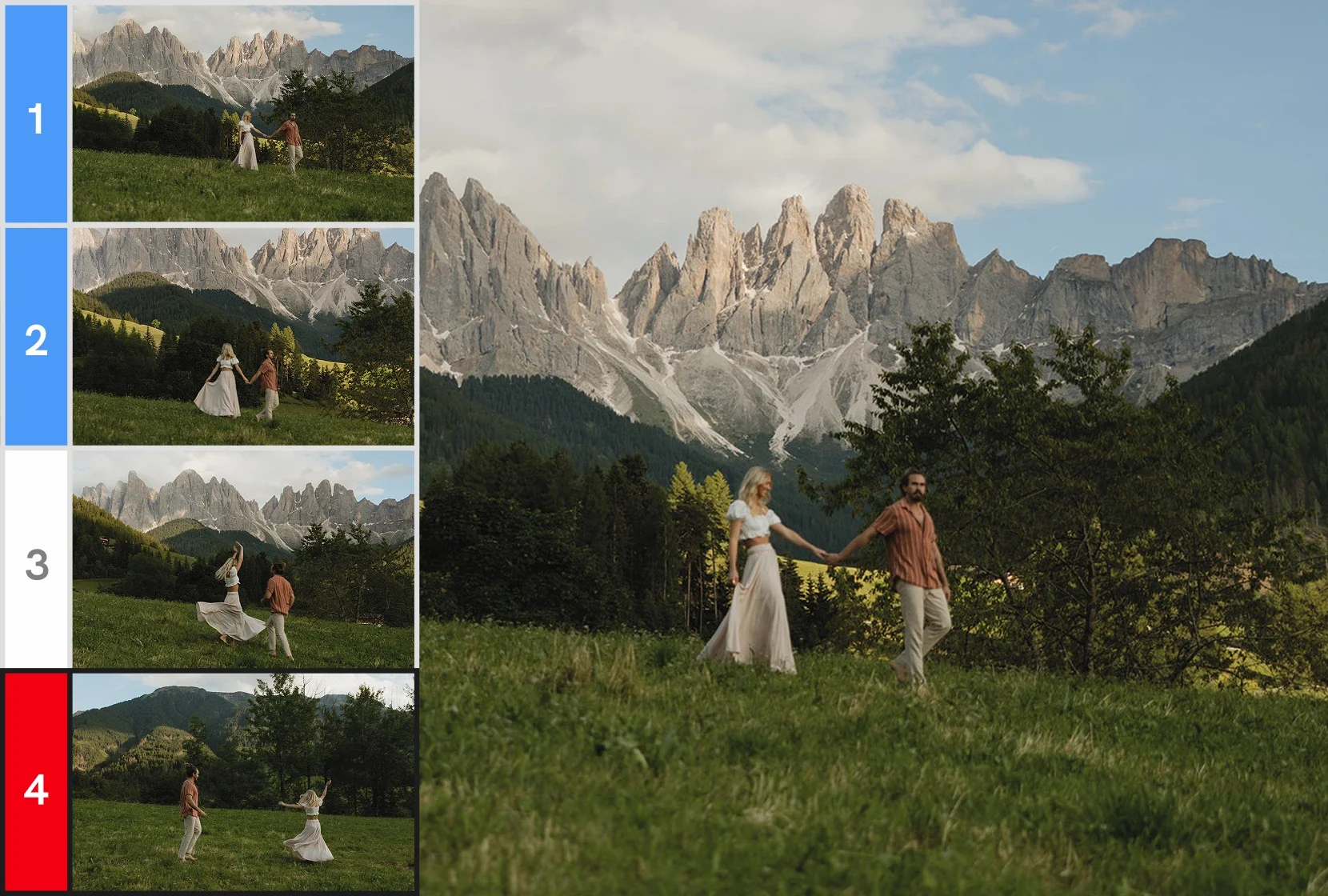
Here’s a look into what Select’s culling process looks like - super simple
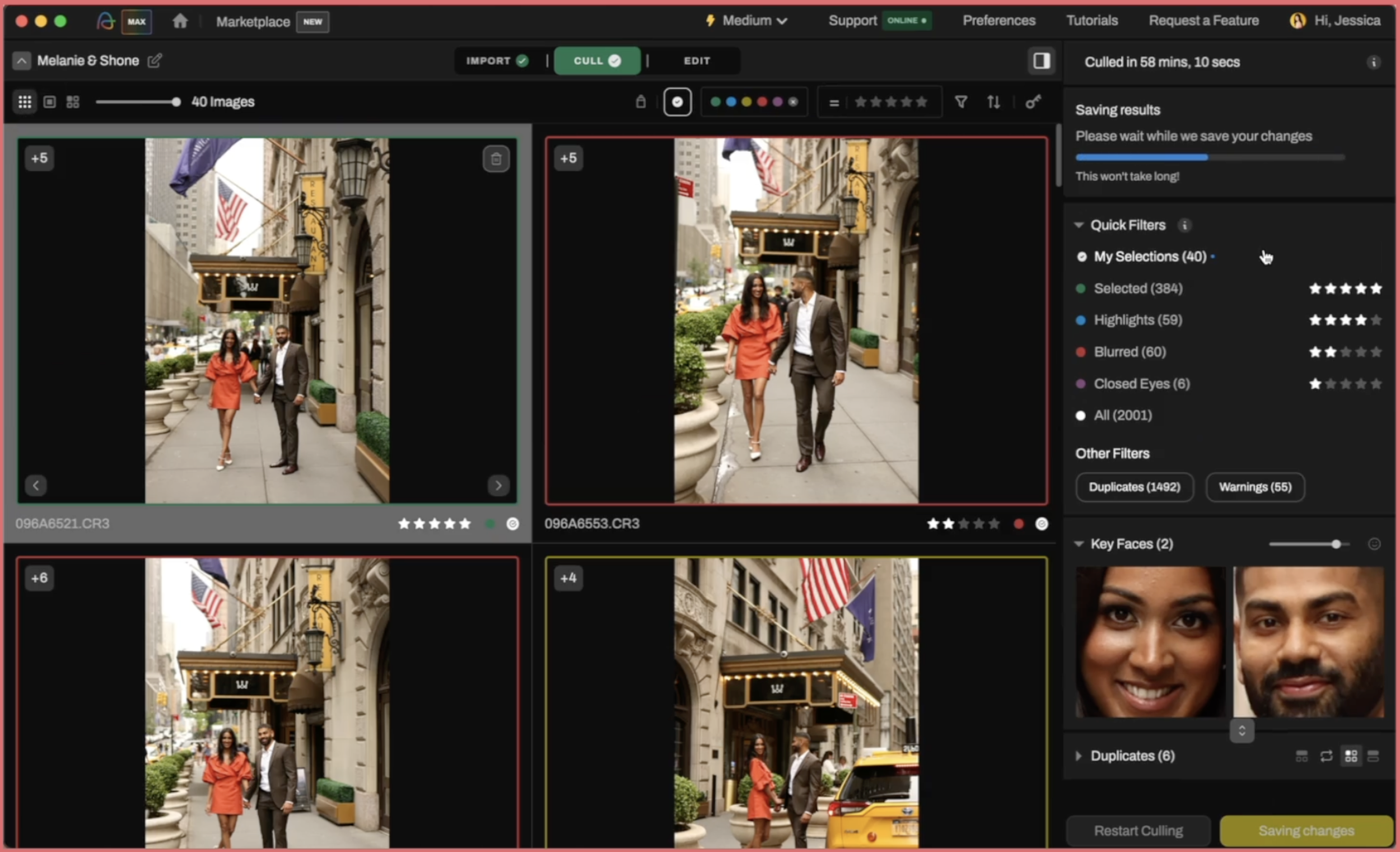
Here’s a look into what Aftershoot’s culling process looks like
Why I Think Aftershoot Has Become an AI Master of None
This is really the heart of it for me, and it hurts a little. Aftershoot started as a culling tool that did one thing, and did it well. Then it added editing, which it also did a good job. Over the last year, it's expanded hard into heavier AI territory that is hard to get behind. AI retouching, a built-in gallery and client delivery system, and most recently, the capability to edit RAW files directly in the software.
I'll be honest about the retouching feature. It still feels pretty rough around the edges to me, and it doesn't feel nearly as refined or as flattering as what a dedicated retouching tool can do. But no company has to be great at everything right out of the gate. But Aftershoot has built its whole brand around being the one AI solution for your entire post-production workflow, and when you stretch yourself across culling, editing, retouching, and gallery delivery all at once, something usually gives a little. I loved and still like what Aftershoot can do with culling and editing, but retouching was the first feature I saw roll out that really fell flat for me. It was not impressive, and the result looked quite amateur, like they had never seen the glories of Facetune at work before.
I still think the culling and the editing are genuinely solid products on their own. But the direction the company is heading, with more and more AI, just isn't the direction I want for my own business anymore.
Why Photographers Are Moving Away From Heavy AI Marketing
There's a bigger shift happening in this industry right now, and I think it's worth naming directly. A 2026 Gallup survey found that Gen Z's excitement about AI dropped from 36% down to 22% in just one year, while the share who say AI actually makes them angry climbed from 22% up to 31%. A separate 2025 survey found that 54% of people would rather see no AI involvement in creative work at all, and 71% said they flat out prefer human-made content over AI-generated content.
Aftershoot has leaned all the way into AI as its core marketing message.
AI culling, AI editing, AI retouching, AI everything, front and center, all the time. Narrative uses AI too, don't get me wrong, but the company actually predates this current AI wave (back in the day they called it "SmartTech," before "AI" became the industry's favorite buzzword), and their messaging has stayed pretty quiet about it in comparison until the past year or so. I personally wish Narrative would tone down the amount of times “AI” is written on their landing page, because I think people might put it on the same level as Aftershoot at first glance. To me, Select should go back to reading like a fast, smart tool rather than an AI-first brand, because Narrative is not that. Aftershoot is.
For a client base and photography community that's growing more skeptical of AI by the year, and especially for a younger community, that distinction is starting to actually matter. The marketing choices a software company makes become part of your brand by association too, whether you meant for that to happen or not.
Is Narrative Easier to Learn Than Aftershoot?
So many photographers in my community started an Aftershoot trial and never actually converted to a paid plan. Not because the software is bad, because Aftershoot is good. But because it was just too high of a lift to actually implement. You've got to get used to a whole new interface, figure out how the groupings and sequences work, and then there are the keyboard shortcuts, which are honestly what make the whole thing fast once you actually know them, but they are not intuitive at all. You basically have to memorize a new language for your hands before the software starts saving you any real time. I think that learning curve is worth it. It was worth it for me. But it's been really interesting watching how many people in my own community just couldn't get over that hump.
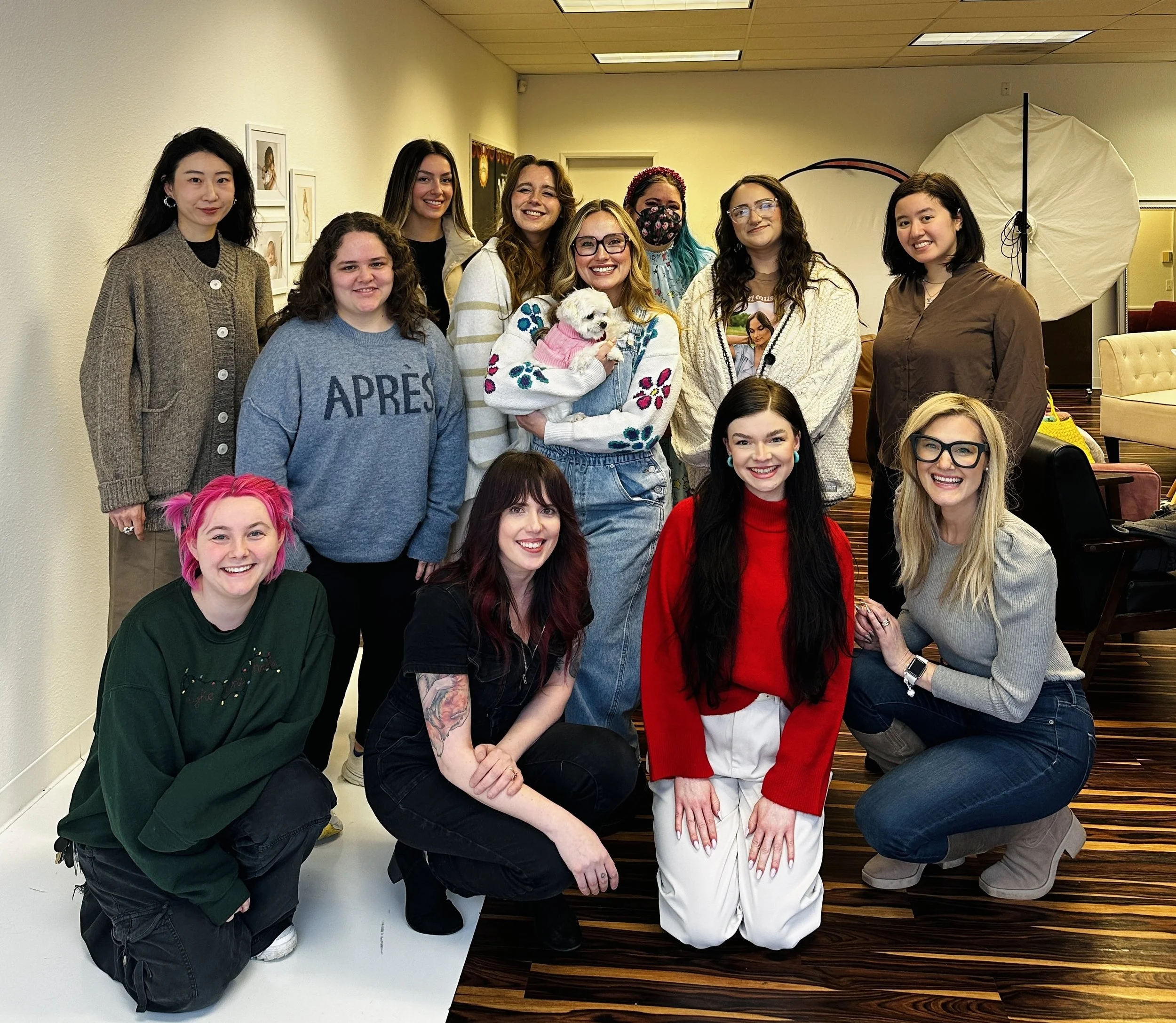
For those of you who don't know, in 2025 I ran an in-person women in photography networking group here in Seattle, and Aftershoot came up constantly in the tools and software we’d share about. I recommended it to those women all the time. And then the next month would roll around, we'd get back together, and so many of them would say the exact same thing: Aftershoot was just too overwhelming to sit down and actually learn it.
I'd actually negotiated a three-month trial for my audience instead of their standard thirty days. I want to include that detail because it says a lot about how real of a commitment learning this software actually was. Thirty days never felt like enough time to me in the first place. If you're anything like me, you sign up for a trial, and then suddenly it's three days before it expires and you still haven't opened the thing. Ninety days felt like the right amount of time to actually sit down and learn it properly.
And here's what's interesting looking back. Even with a full three-month trial, people still weren't converting to paid plans. I could see this happening in real time on the back end, because I was an Aftershoot affiliate, the same way I'm a Narrative affiliate now. My conversion numbers were genuinely low, and that's not normal for me. I test things thoroughly before I ever put my name on them. I already told you I used Aftershoot privately for a full year before I ever recommended it publicly. I take that stamp of approval seriously. So it says something that even with my recommendation behind it, and a full ninety days to learn it, people still weren't converting, simply because of the user experience.
On the flip side, Narrative doesn't ask a big commitment of you. You open the software, you import your files, you scroll through your photos, you favorite the ones you want. That's it. I am someone who struggles with new technology more than most, so when I tell you the learning curve here is basically nonexistent, I mean it. And that lower barrier to entry matters. It's the difference between a tool that actually fits into your real life as a working photographer and one that just looks impressive in a features comparison chart.
Aftershoot vs. Narrative Pricing: Is One Actually Cheaper?
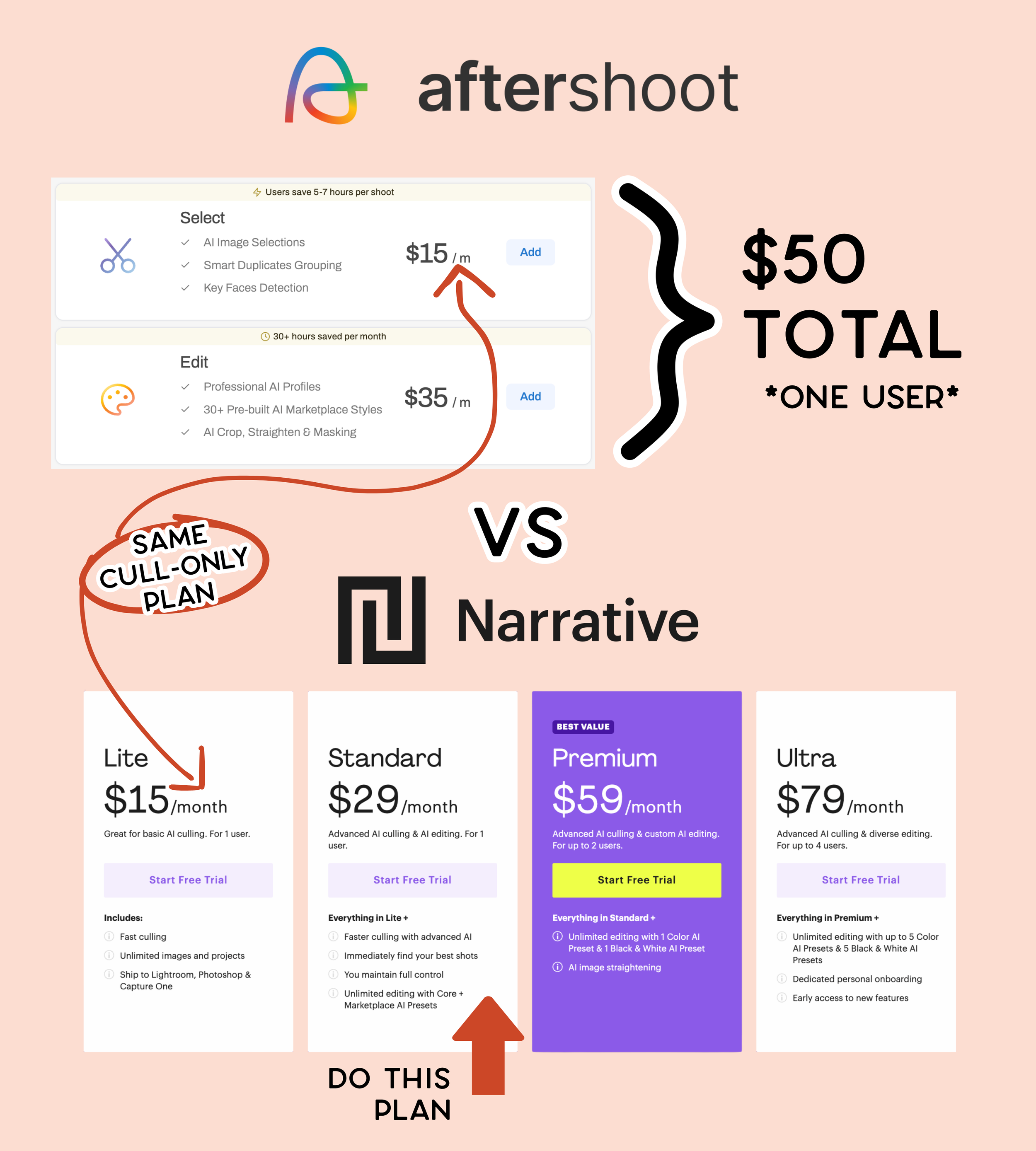
I want to be careful here, because the numbers have shifted recently and I don't want to oversell this. Right now, entry-level pricing between the two is honestly pretty close. Narrative's Lite plan (culling only) runs about $10 a month, and Aftershoot's culling-only plan is $9.99. At the top end, Narrative's Ultra plan is $60 a month, and Aftershoot's full bundle of culling, editing, and retouching is also $59.99. So no, I can't tell you with a straight face that Narrative is dramatically cheaper today, because it isn't. Aftershoot's plans are one penny cheaper across the board, but that's just the classic .99 pricing trope, not an actual difference in what you're paying.
What I can tell you is that Aftershoot just completely overhauled its pricing model this year, moving away from a simpler unlimited everything subscription toward an à la carte, modular setup where you pay separately depending on which tools you actually use. Their new AI retouching feature is still listed as "pricing coming soon," which tells me it’s still in beta and what you're paying today might not be what you're paying once that feature actually gets monetized. Narrative's pricing, by comparison, has stayed a pretty consistent four-tier ladder for a while now. So the real point I want to make isn't that Narrative is cheaper. It's that Narrative's pricing has been predictable, and Aftershoot's is very much still in motion, which matters a lot when you're building a business around a recurring software cost.
The Proof: A 10,000 Photo Wedding, Culled By Hand, In Two Hours
I want to end on the thing that actually convinced me this switch was the right call, not just in theory, but in real practice. I recently culled a full wedding gallery, 10,000 RAW images, in right around two hours using Narrative. That's me looking at every single image by hand and making every select myself, not letting an AI take a first pass that I'd then have to go back and audit. This is the kind of speed most photographers are looking for, without giving up the one thing I truly care about, which is knowing that every photo in that gallery is there because I chose it, for a reason I could explain to the couple whose wedding it was.
So Am I Anti Aftershoot?
No! Not even a little! I used Aftershoot for several years, and I loved it. I'm not going to pretend that time didn't happen, or that it wasn't genuinely good for my photography business while I was in it, because it was.
Here's where I actually land, though. Aftershoot used to just be culling and editing, and it did both of those things well. I still think the culling and editing hold up. I will say that I like Narrative’s structure of their editing because it’s a lot more seamless. I can definitely get into that in a separate blog post.
My issue isn’t Aftershoot’s culling or editing; it's that Aftershoot has gone all in on being an AI-first brand, front and center, and that's just not where I want to be, and it's not where a lot of my own community wants to be either. I loved Aftershoot back when it was simple. I still think it's a solid piece of software for the right person. But Narrative is the better fit for me, and for the photographers I talk to every single day, the ones who just want something quick, something simple, and something that doesn't make AI the main marketing point in a generation that is only getting more anti-AI by the year.
If you want to try it for yourself, Narrative offers a 14-day free trial, no credit card required. And yes, 14 days instead of the 90 I negotiated with Aftershoot back in 2024, but that's kind of the point. Narrative takes maybe a day to learn, not a few months. Sign up using the link below, and if you end up loving it as much as I do, use code jessicawhitaker for 10% off.