
35mm vs 50mm f/1.2 Prime Lens Comparison for Portrait Photography | Which Should YOU Buy?
35mm vs 50mm: Which Prime Lens Belongs in Your Camera Bag?
Choosing between a 35mm and a 50mm lens comes up all the time in my free Build and Bloom Facebook community, and I understand why, since these two focal lengths are only 15mm apart but create very different looks once you're out on a photoshoot. The 35mm pulls more of the environment into your frame and can add a sense of movement and drama, while the 50mm gives you a softer background and more natural proportions that work for almost any genre of photography.
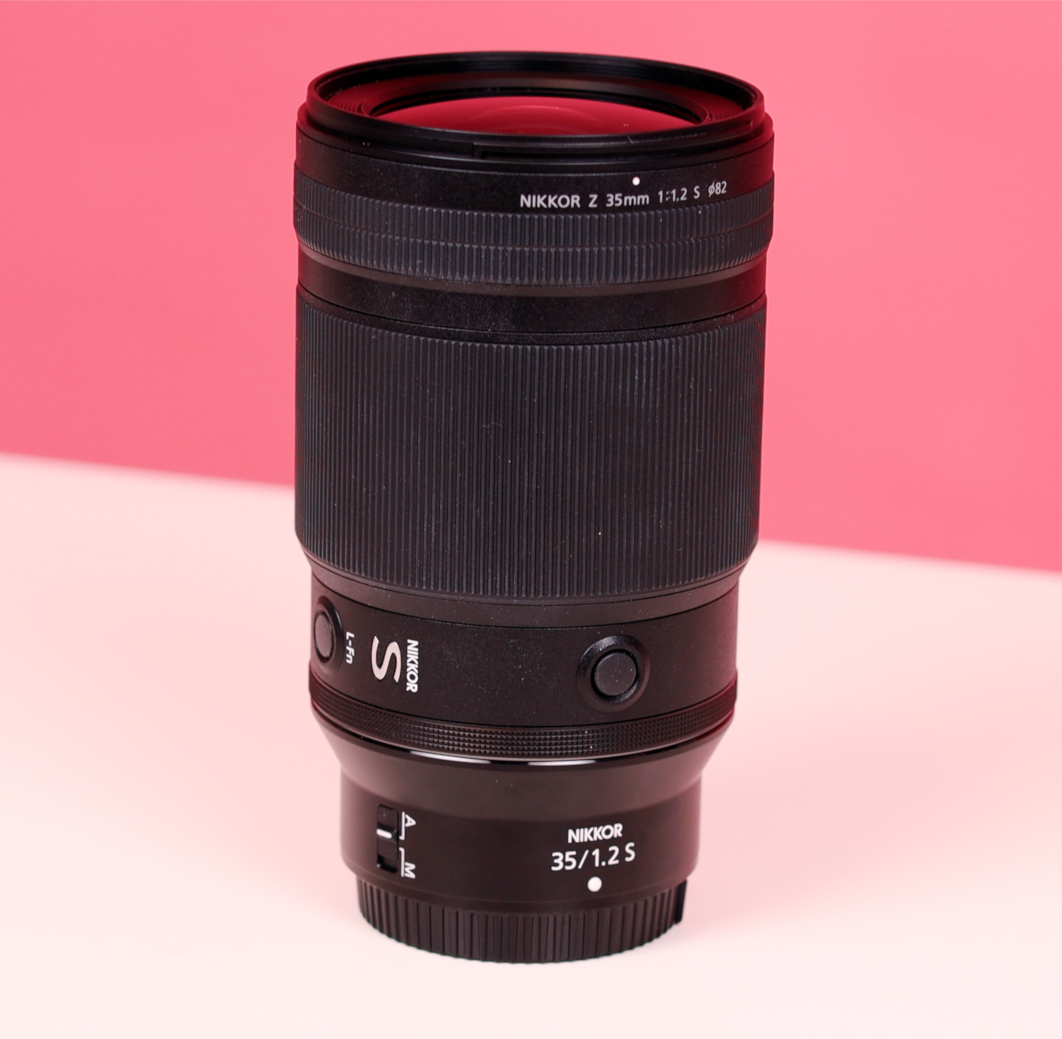
In this 35mm vs 50mm lens comparison, I'm putting the Nikon Z 35mm f/1.2 S and the Nikon Z 50mm f/1.2 S side by side using real sample images from portrait and couples photoshoots. I photographed these on the Nikon Z8 and Z9, but everything here comes down to the focal length itself, so it applies whether you use Canon, Sony, Fujifilm, or Nikon.
Here's what we'll look at:
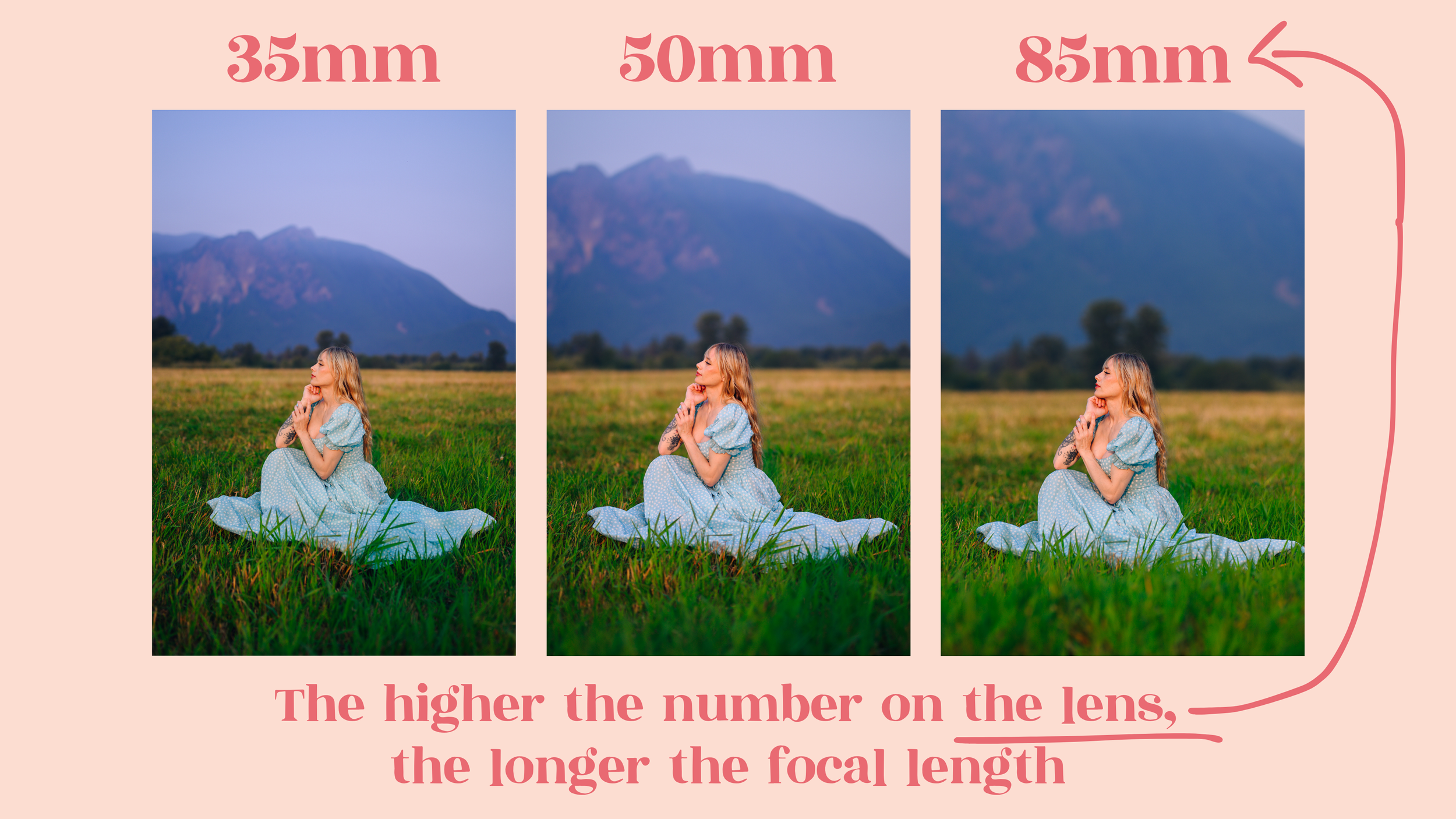
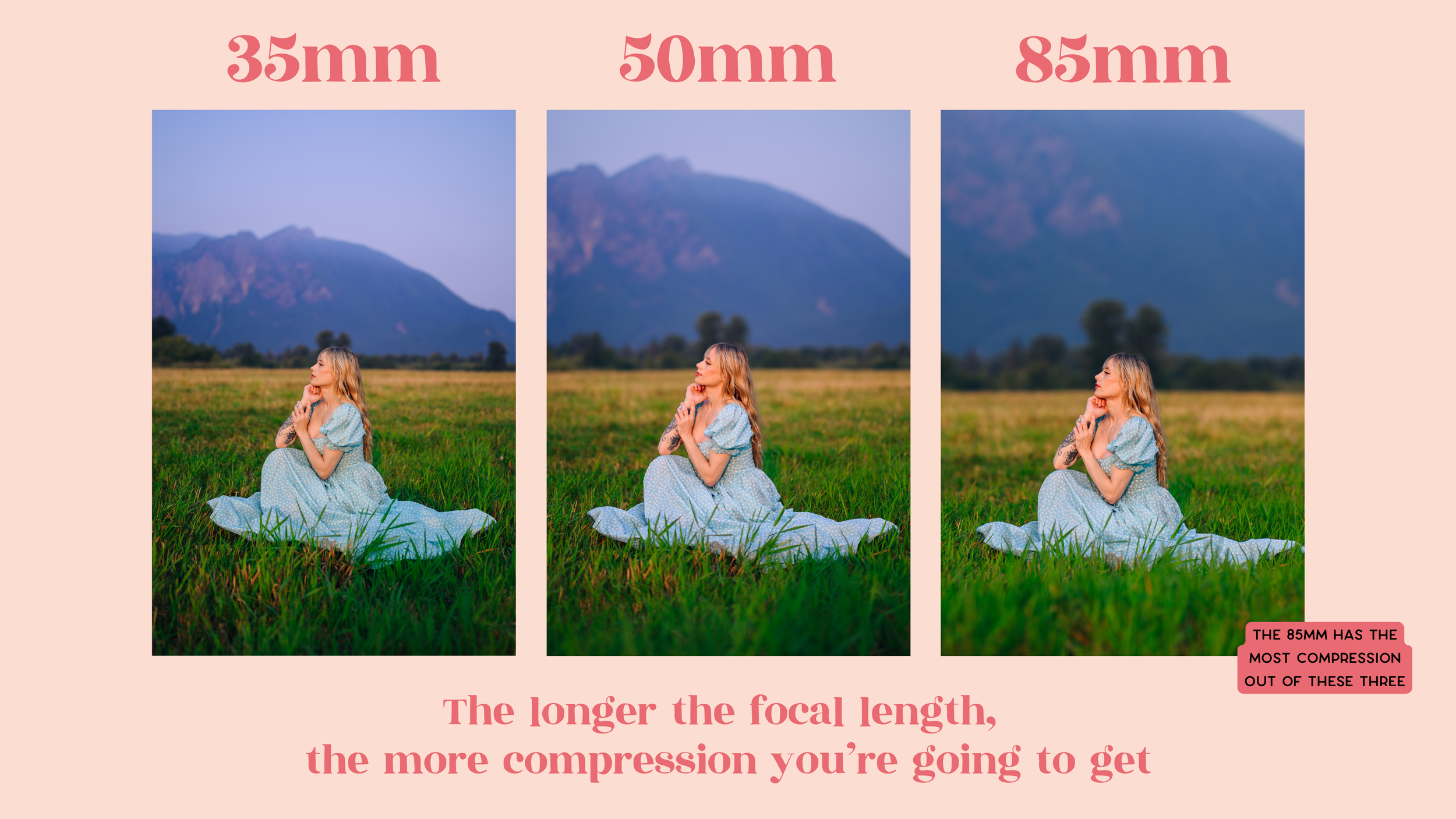
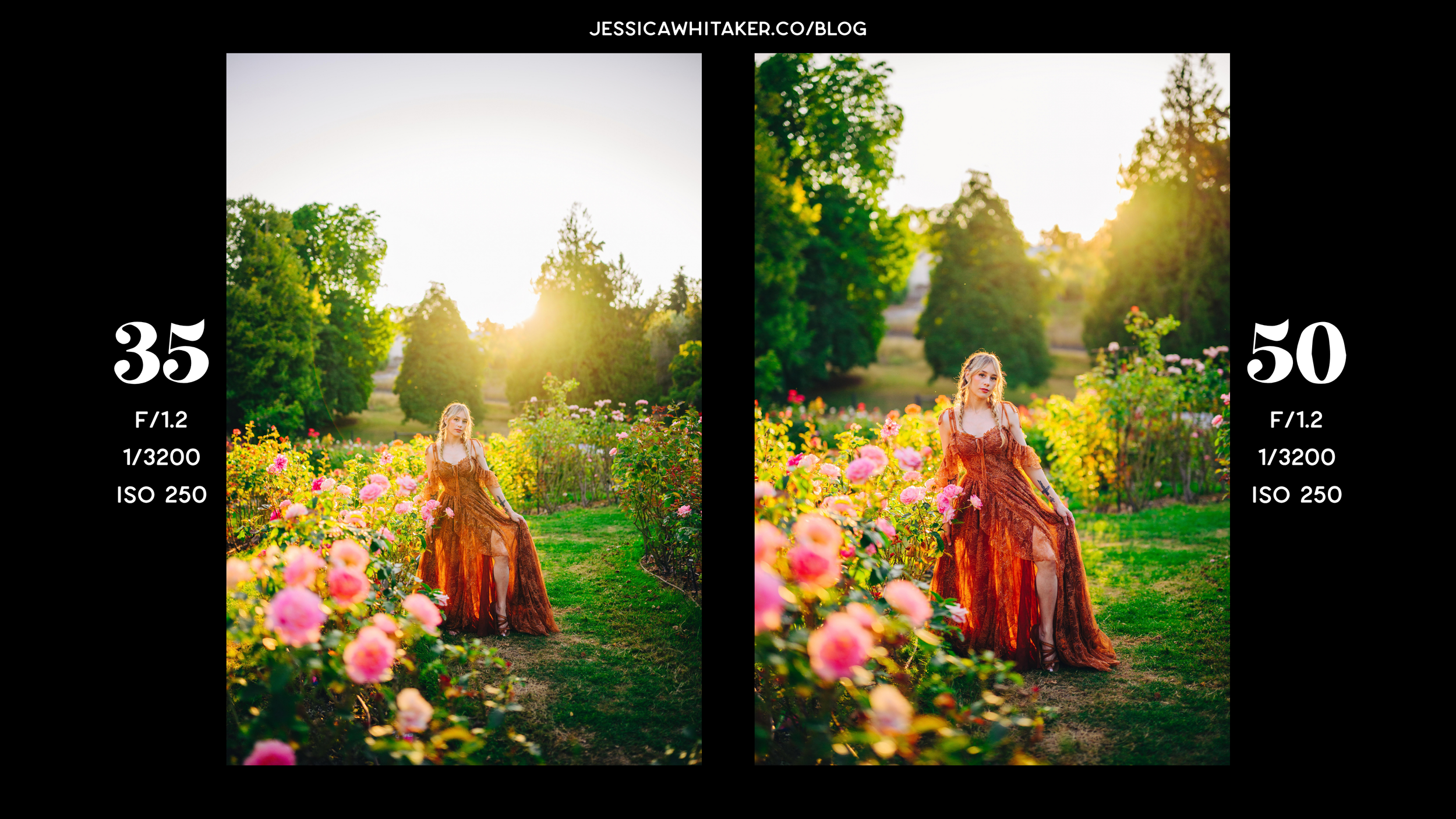
Lens compression: how the 50mm pulls the background in toward your subject for a softer, creamier blur
Field of view: how much more of the scene the 35mm captures from the exact same spot
Wide-angle distortion: how the 35mm can stretch faces and bodies, and how to use that to your advantage
Price and budget options: Nikon S pricing, Canon alternatives, third-party lenses, and buying used on KEH
At a Glance: 35mm vs 50mm f/1.2 Comparison Table
| Feature | 35mm Prime Lens | 50mm Prime Lens |
|---|---|---|
| Best For | Lifestyle, travel, documentary-style weddings, tight getting-ready suites, branding photoshoots in small spaces | Portraits, bridal party, detail shots, food, events, newborn and pet photography |
| Field of View | Wide, captures more of the environment | Narrower, keeps the focus on your subject |
| Lens Compression | Less, so the background looks further away | More, so the background looks larger and closer |
| Distortion | Noticeable toward the edges, can stretch faces and bodies | Minimal, with natural proportions |
| Background Blur | Blurry at f/1.2, with more of the environment visible | Softer, creamier blur at f/1.2 |
| Overall Feel | Immersive, whimsical, a sense of movement | Clean, subject-focused, classic portrait look |
When to Use a 35mm Prime Lens
Lifestyle & Travel Photography
The 35mm focal length used to be one of my favorites back in 2017, when the Sigma 35mm Art was at its peak. I was traveling a ton at the time, and it made the perfect travel lens because I could fit a lot of the environment into my frame while still shooting at a low aperture for that blurry background I love. These days I lean toward longer focal lengths like the 85mm for portraits (partly because my Sigma Art broke, and I'm planning to send it to KEH for repair), but the 35mm still has a very specific place in my camera bag.

Ring Shots, Getting-Ready Suites & Tight Spaces
At weddings, I reach for the 35mm for very specific shots, like the ring shot or photographing one of the partners in a small getting-ready suite where it's a tight squeeze but I still want that wide-open aperture. The same goes for branding photoshoots, like a client working in a coffee shop or at their office desk where I can't back up any further. Once you reach a certain price point as a wedding photographer, it's important to have different tools in your toolbox, because even if you only use the 35mm for four or five moments in a day, those moments are forever.
I make a stylistic choice to shoot wide open at f/1.2, so that's what you'll see in my sample images, but the differences between these focal lengths apply whether you prefer f/1.4, f/1.8, or something higher.

When to Use a 50mm Prime Lens
The Most Versatile Prime Lens for Beginners
A 50mm is usually the first prime lens photographers buy once they graduate from their kit lenses. The f/1.8 version is nicknamed the "nifty fifty" and usually comes in under $200. For me, the Nikon 50mm f/1.8 was my first splurge after I'd outgrown the Costco kit lenses that came with my very first DSLR, which was a Nikon!
Portraits, Bridal Parties & Detail Shots
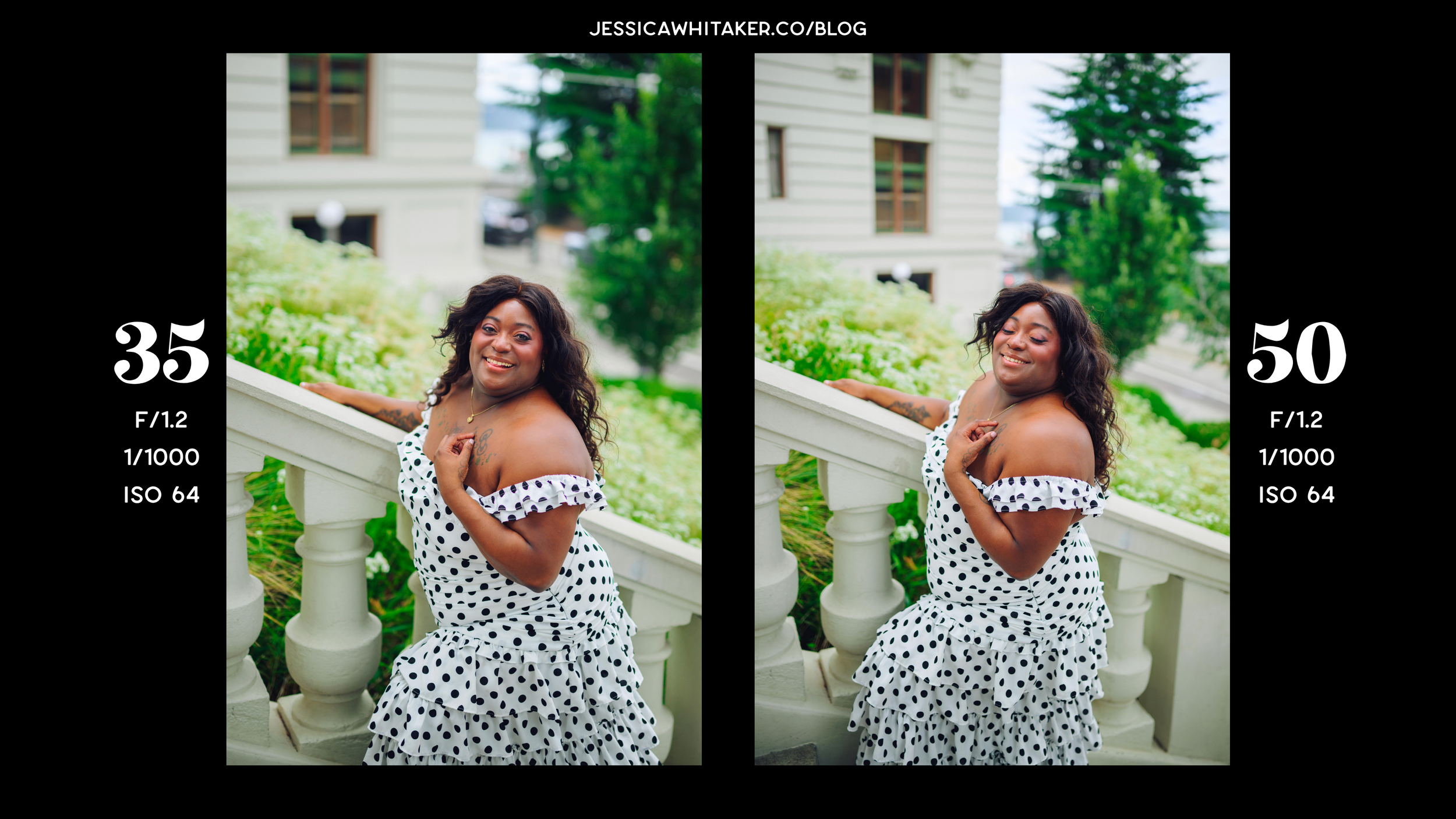
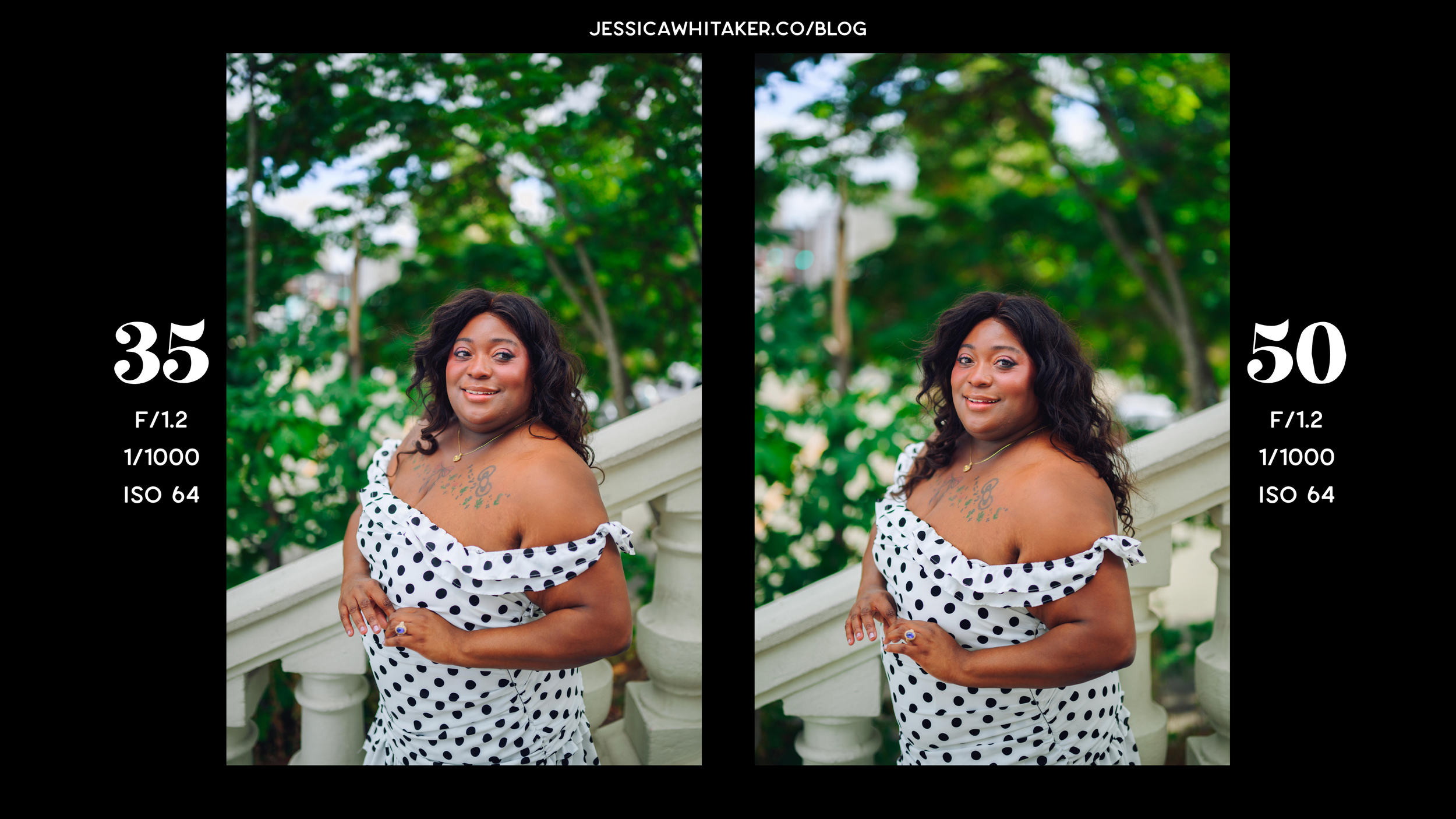
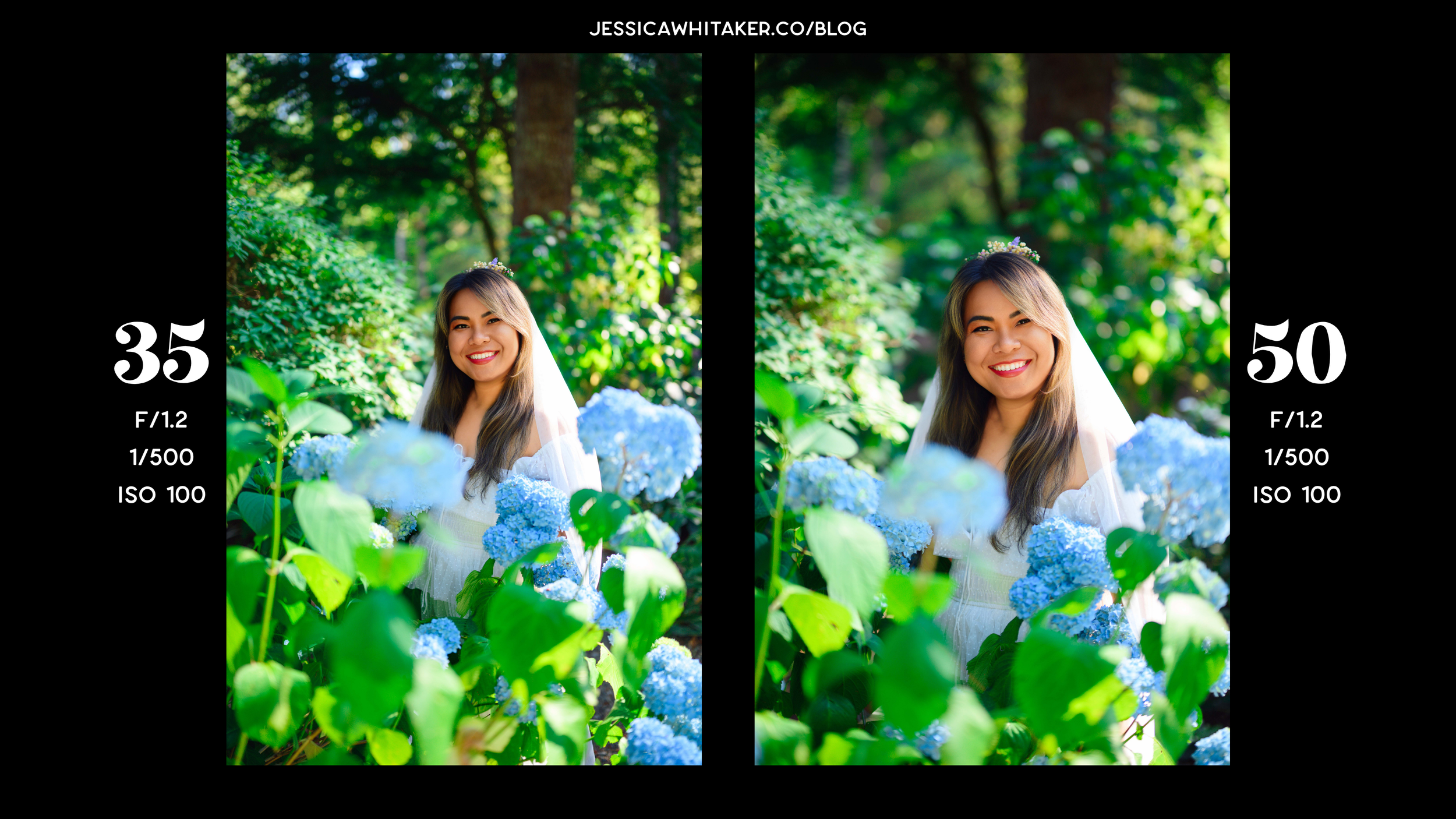
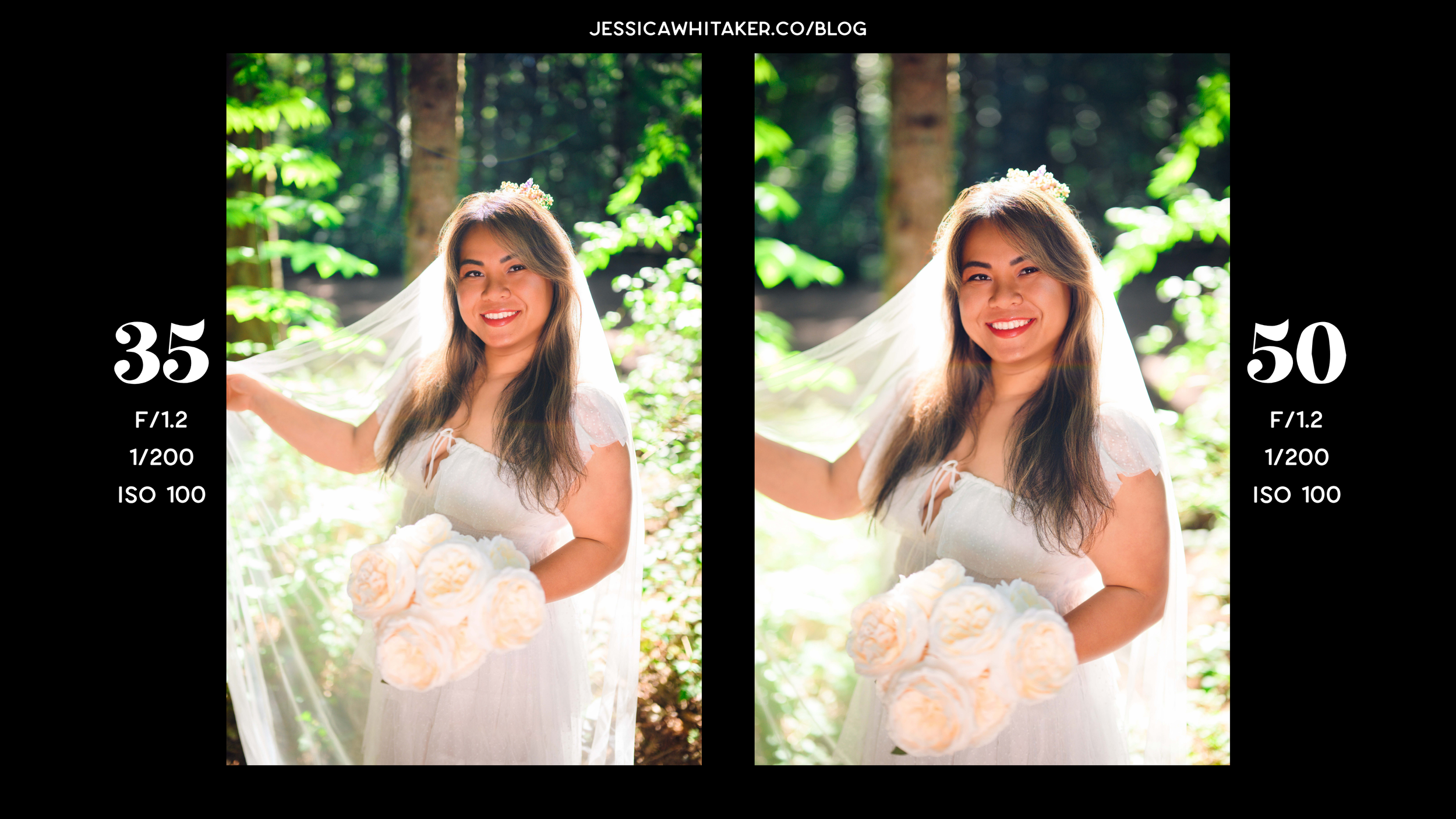
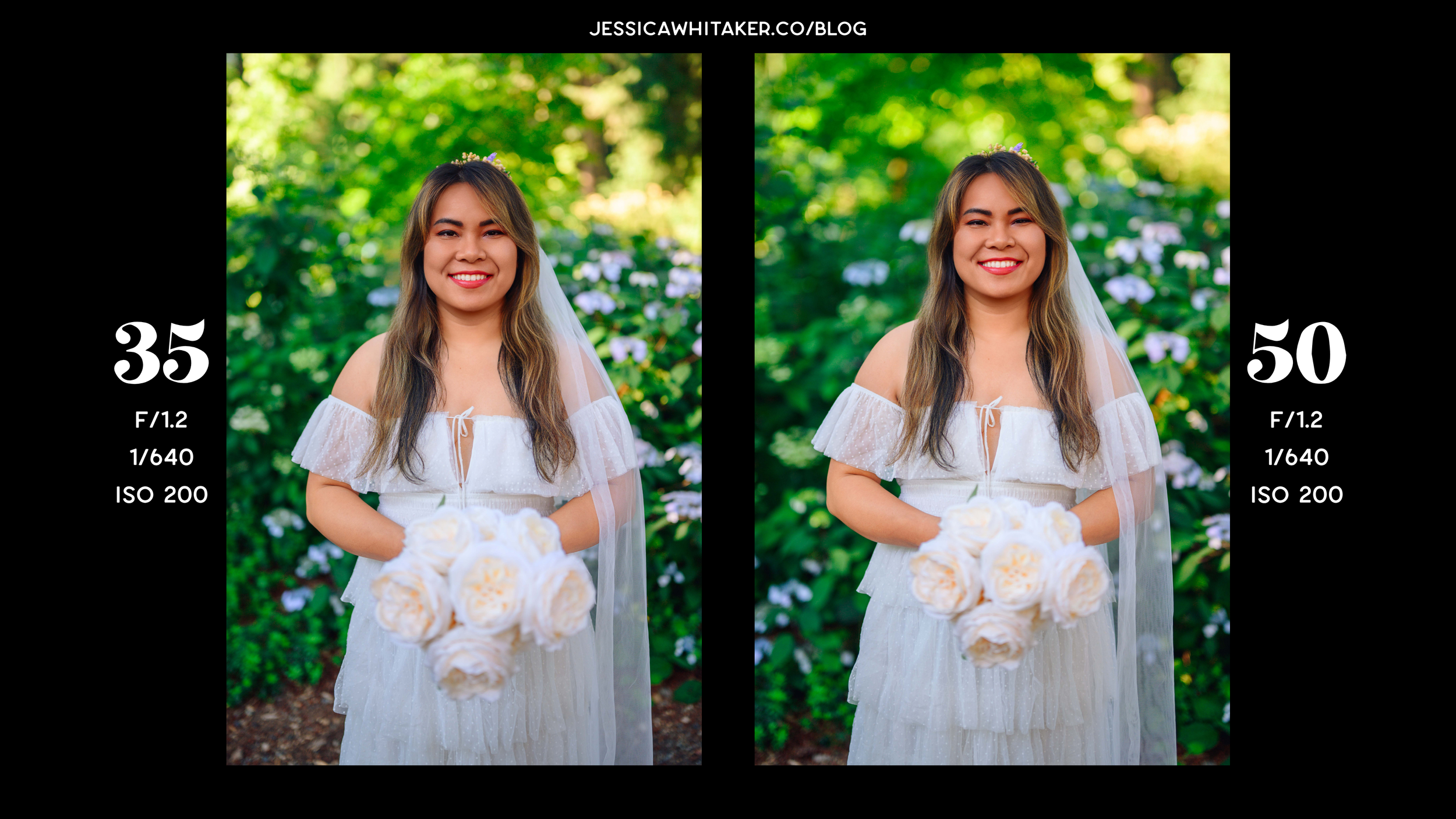
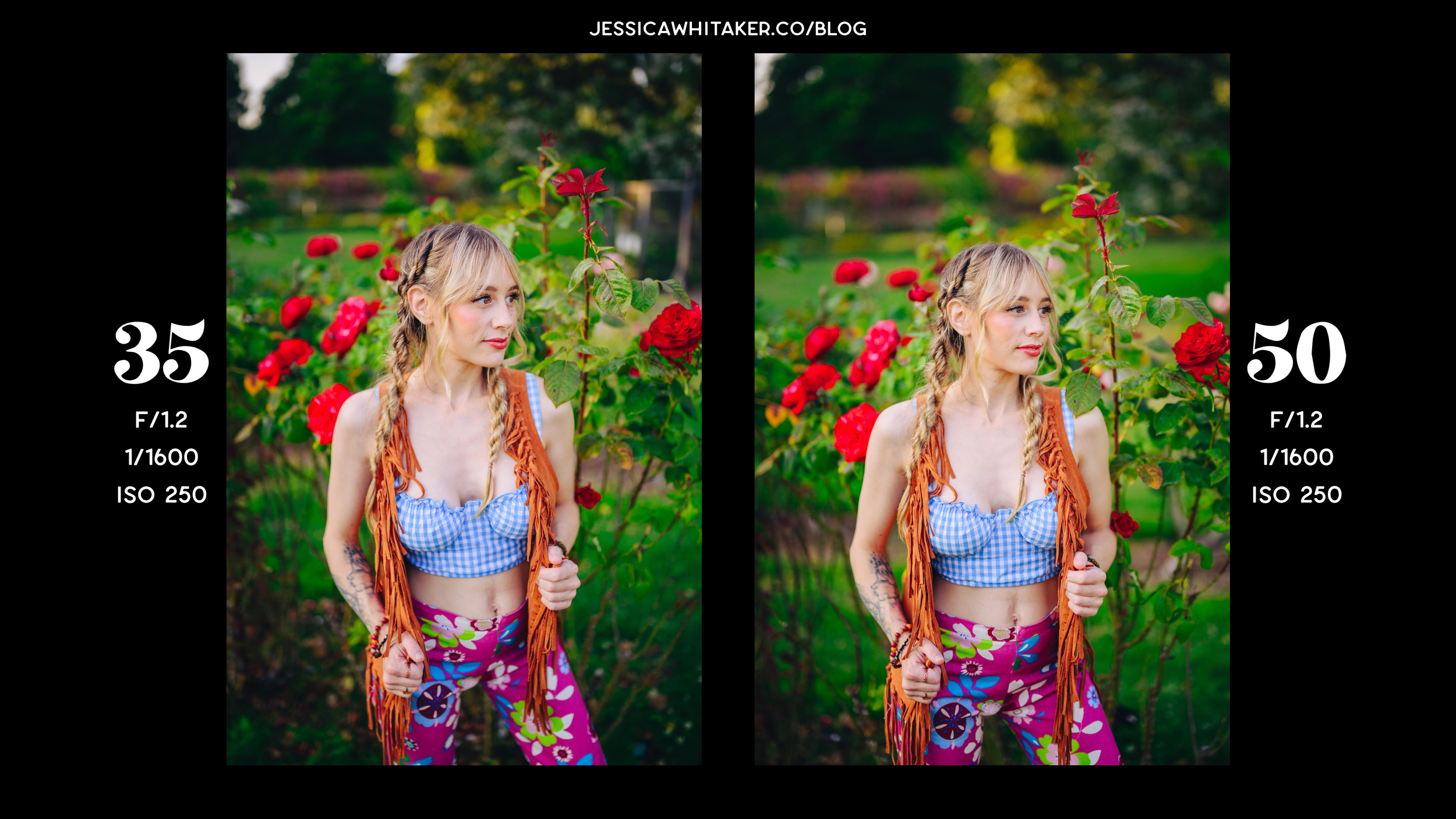
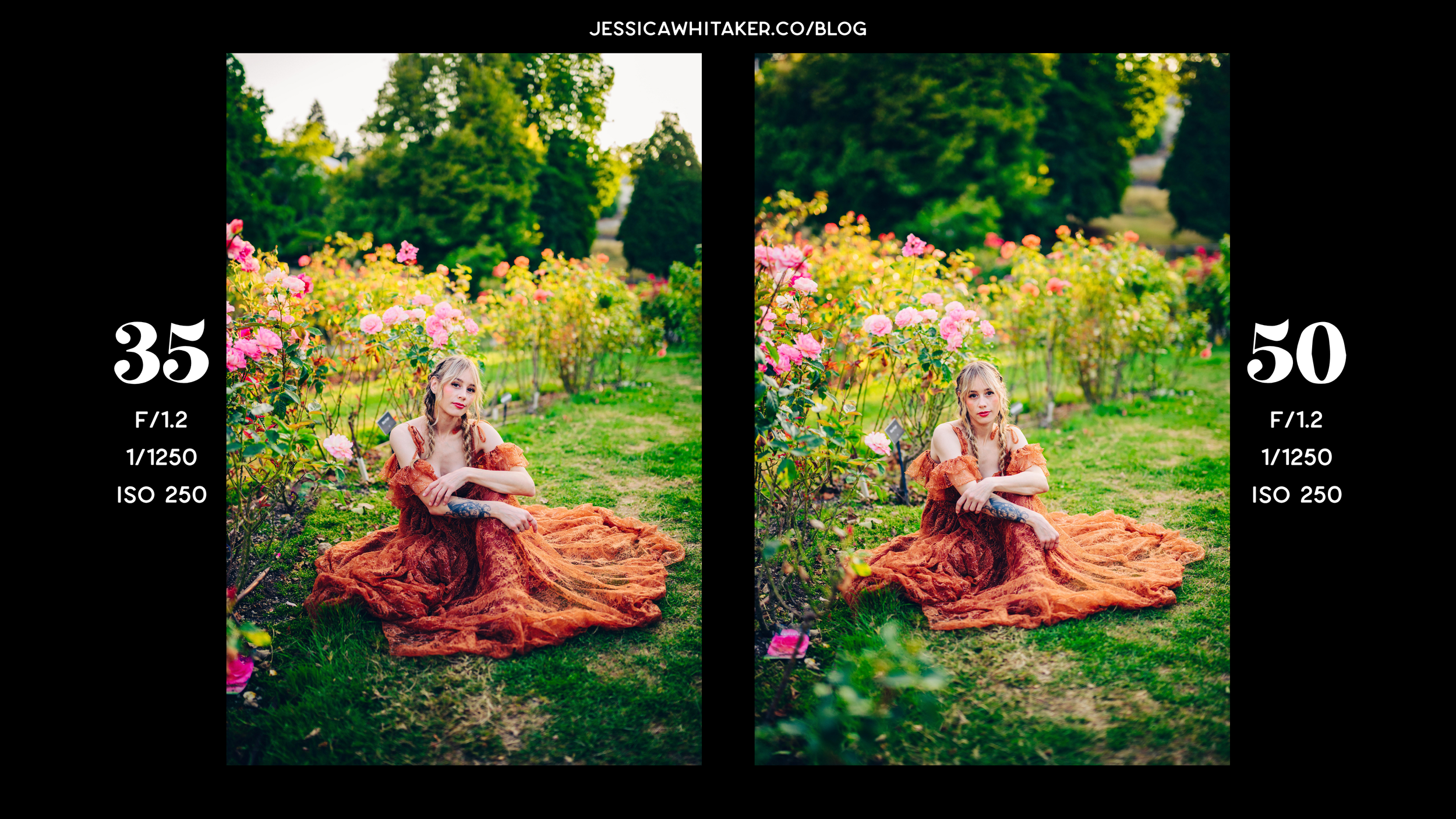
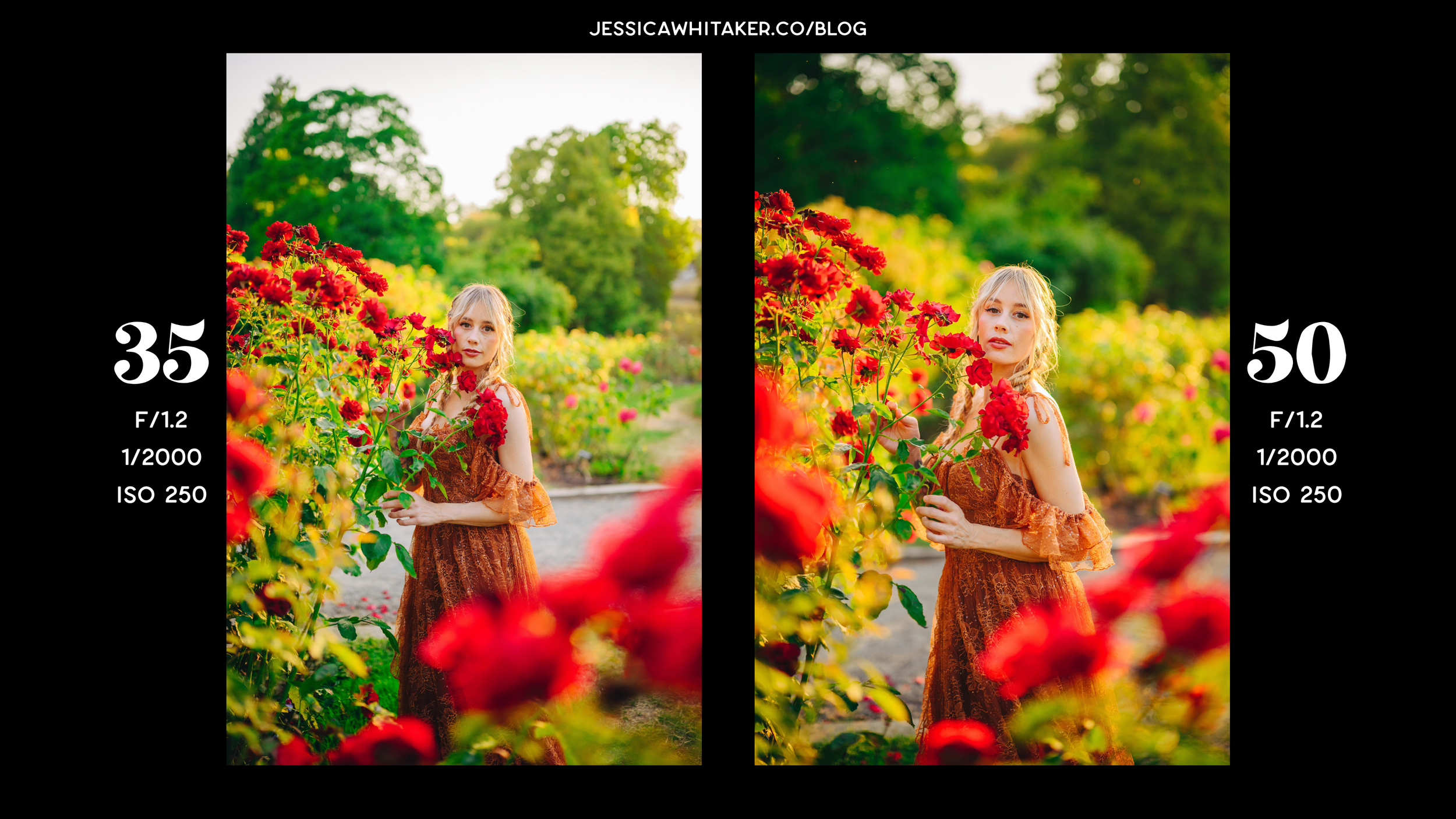
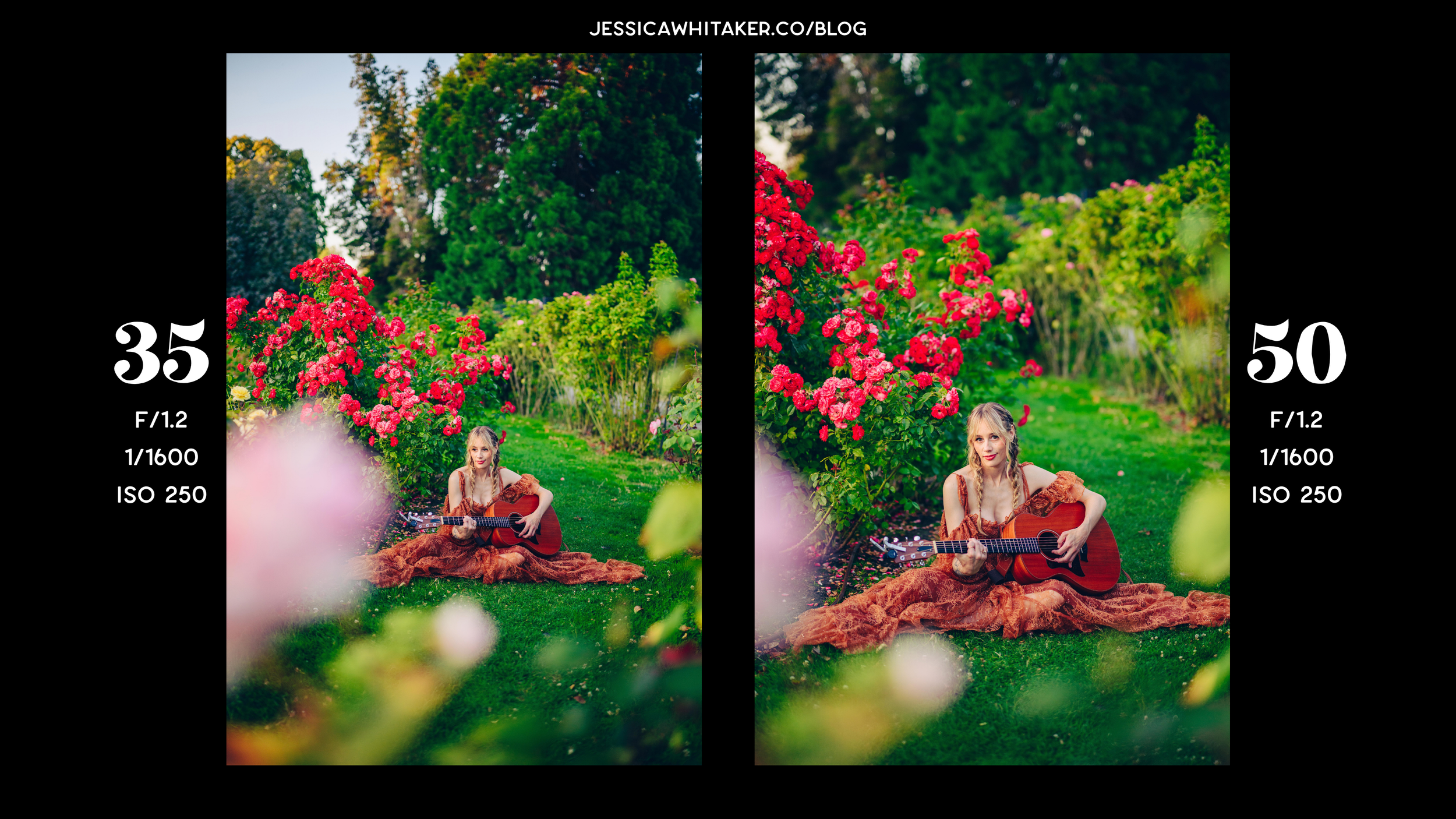
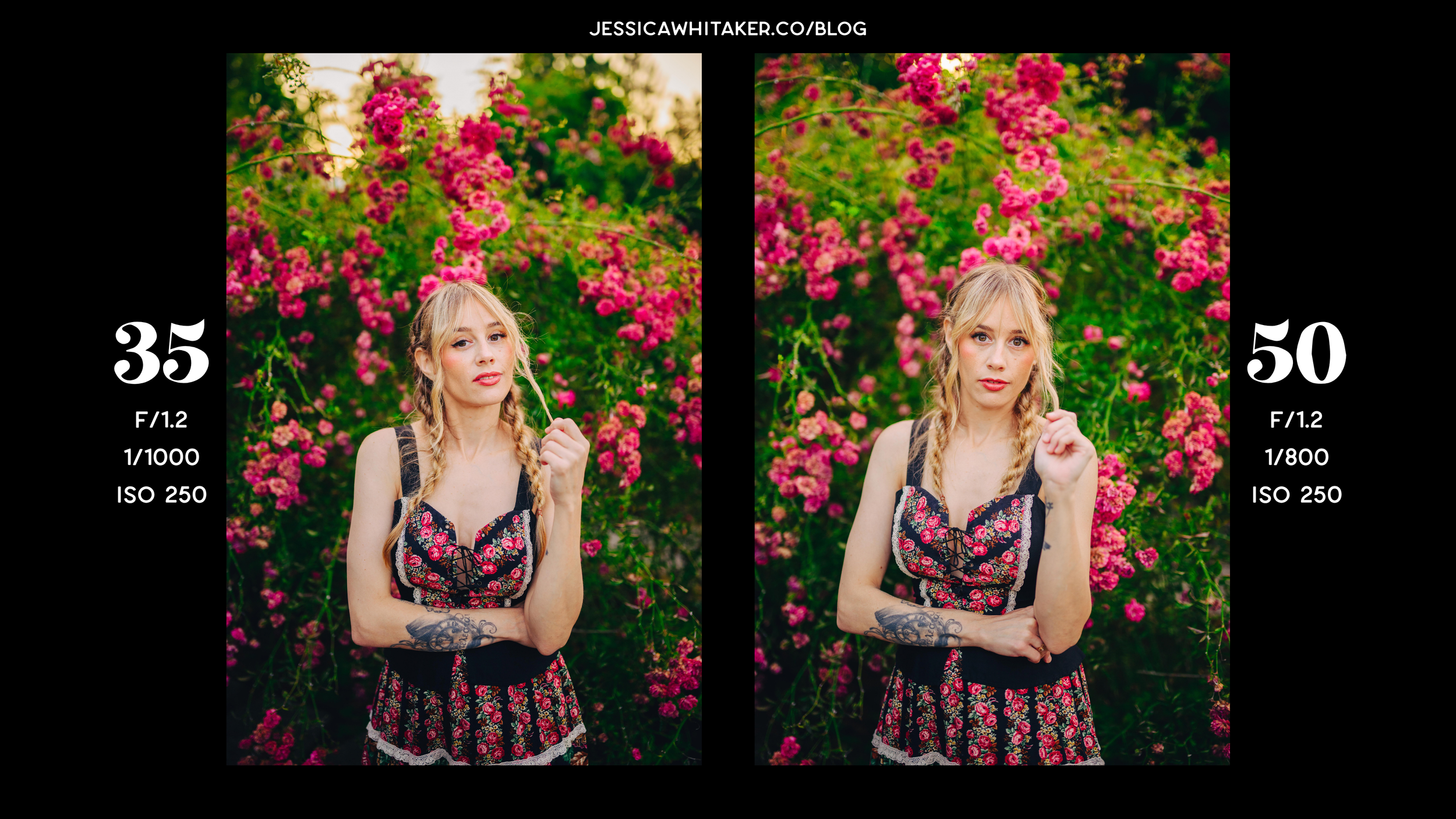
The 50mm is a traditional portrait lens, and it works beautifully for both close-up and full-body portraits. It's also a great choice for group photos like bridal party portraits and for detail shots at a wedding reception or of bridal accessories. Because a 50mm has more lens compression than a 35mm, you'll get a blurrier background even when both lenses are set wide open at f/1.2.

Food, Interiors, Events & Low Light
Beyond portraits, the 50mm is used for food photography, interior details like a styled corner of a home or a specific design feature, and event photography like a speaker on stage or a live music performance, as long as you can get close enough. Since a 50mm prime can open up as wide as f/1.2, it also performs better in low light than most zoom lenses, which is a big reason so many photographers keep one in their camera bag no matter what genre they work in.
What Is Lens Compression?
Lens compression refers to the relationship between your subject and the background, and how that relationship changes as your focal length gets longer. The longer the focal length, the more the background appears to pull in toward your subject, so everything behind them starts to look larger and closer than it actually is.
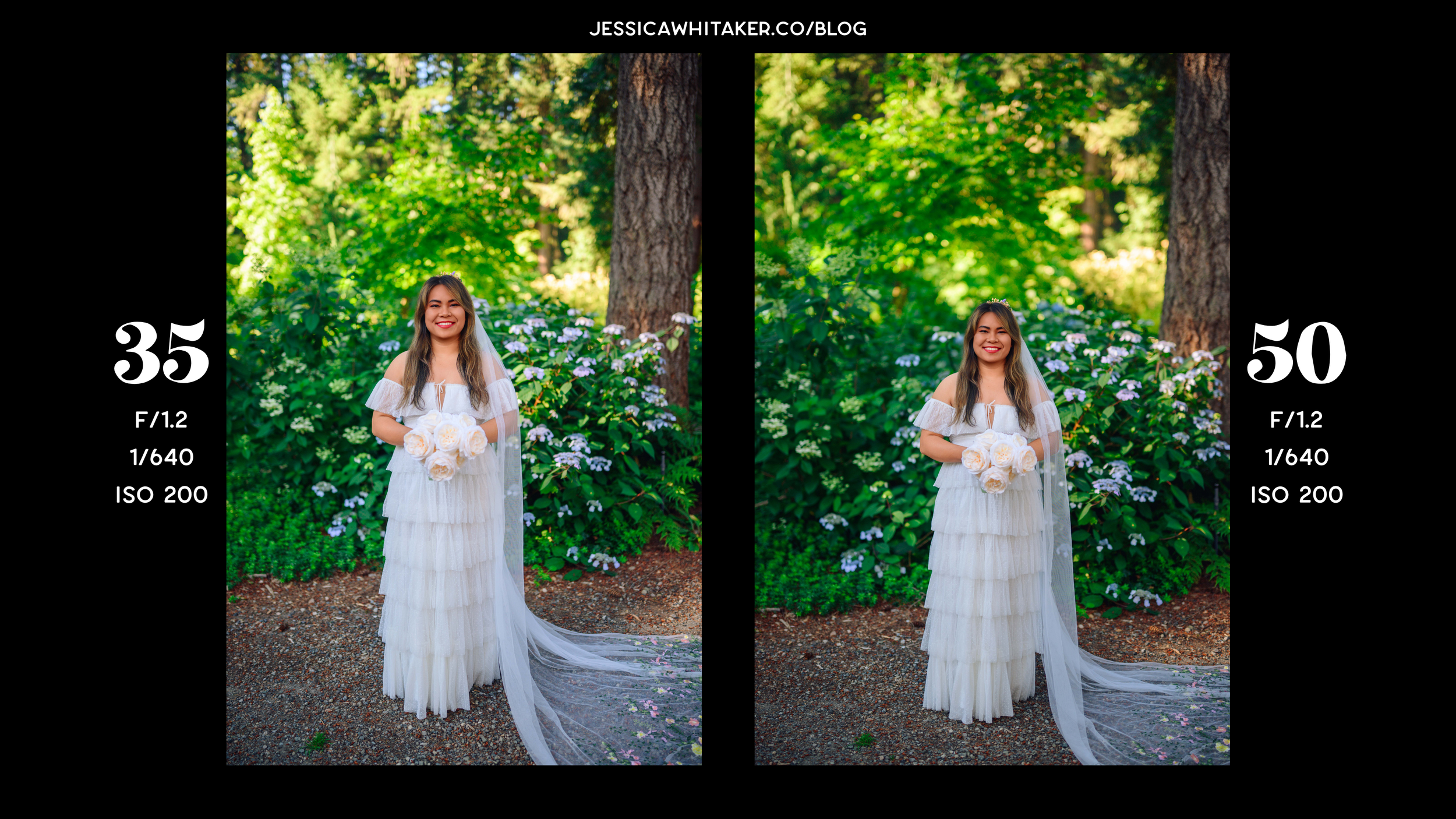
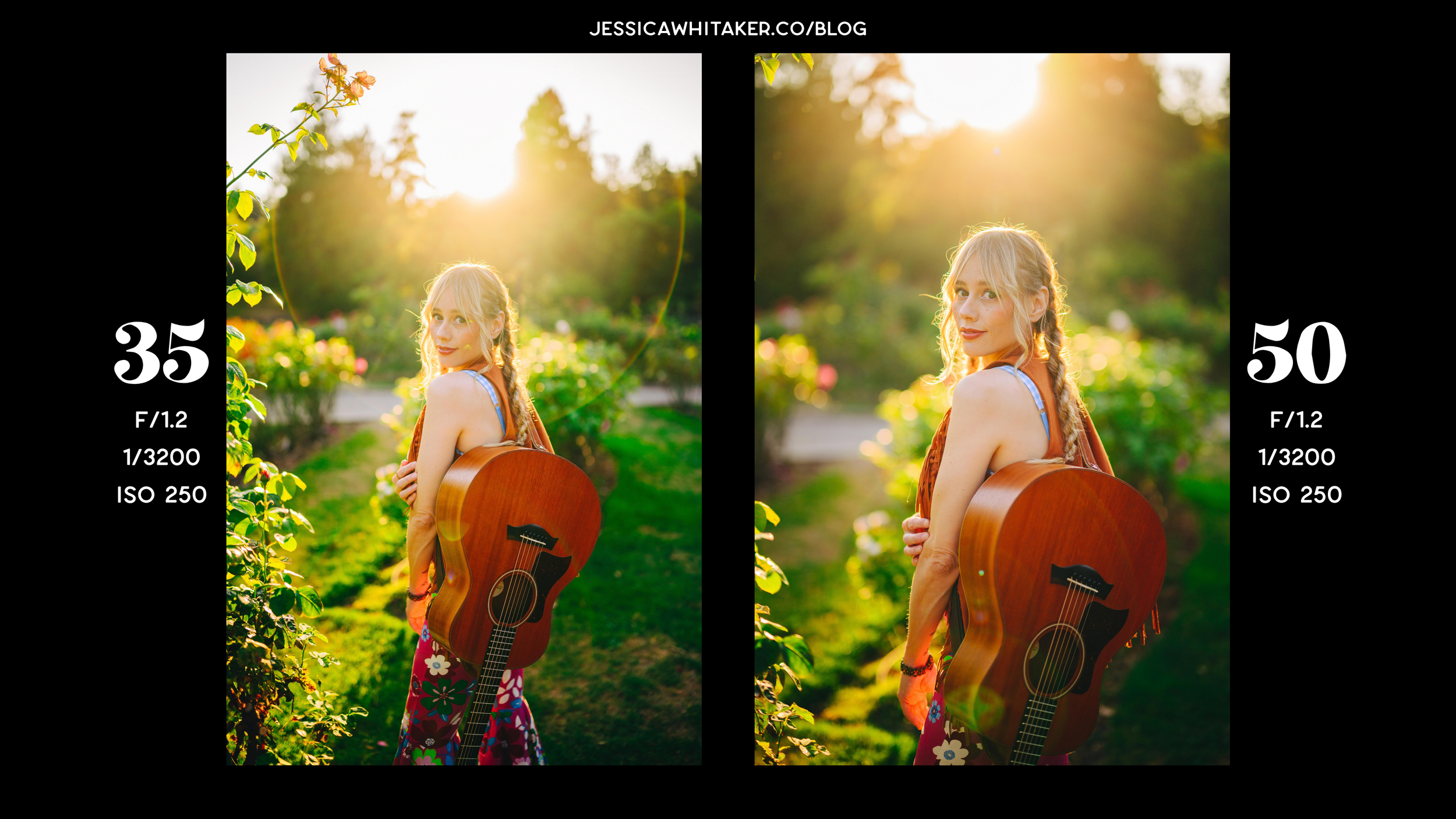
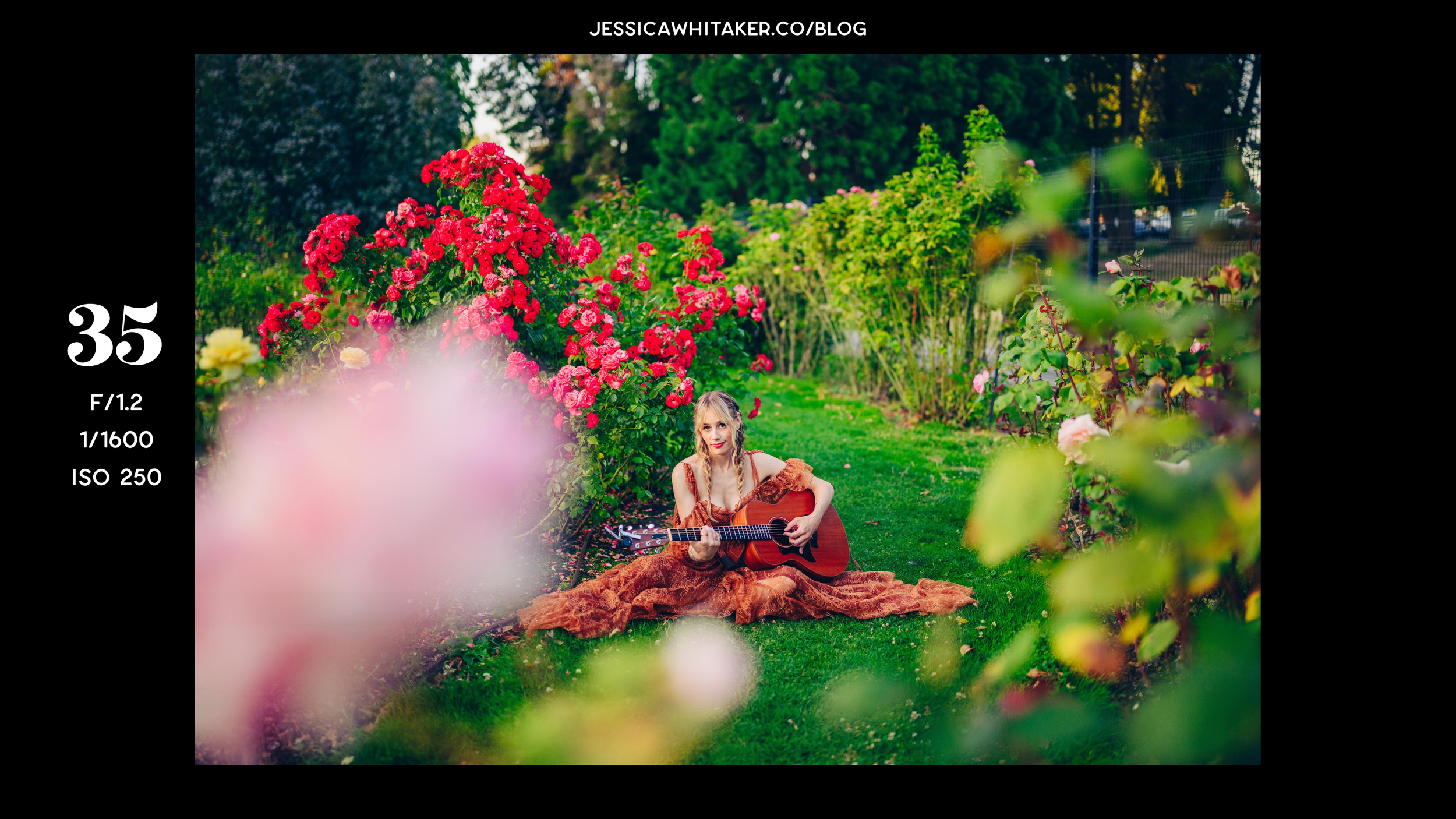
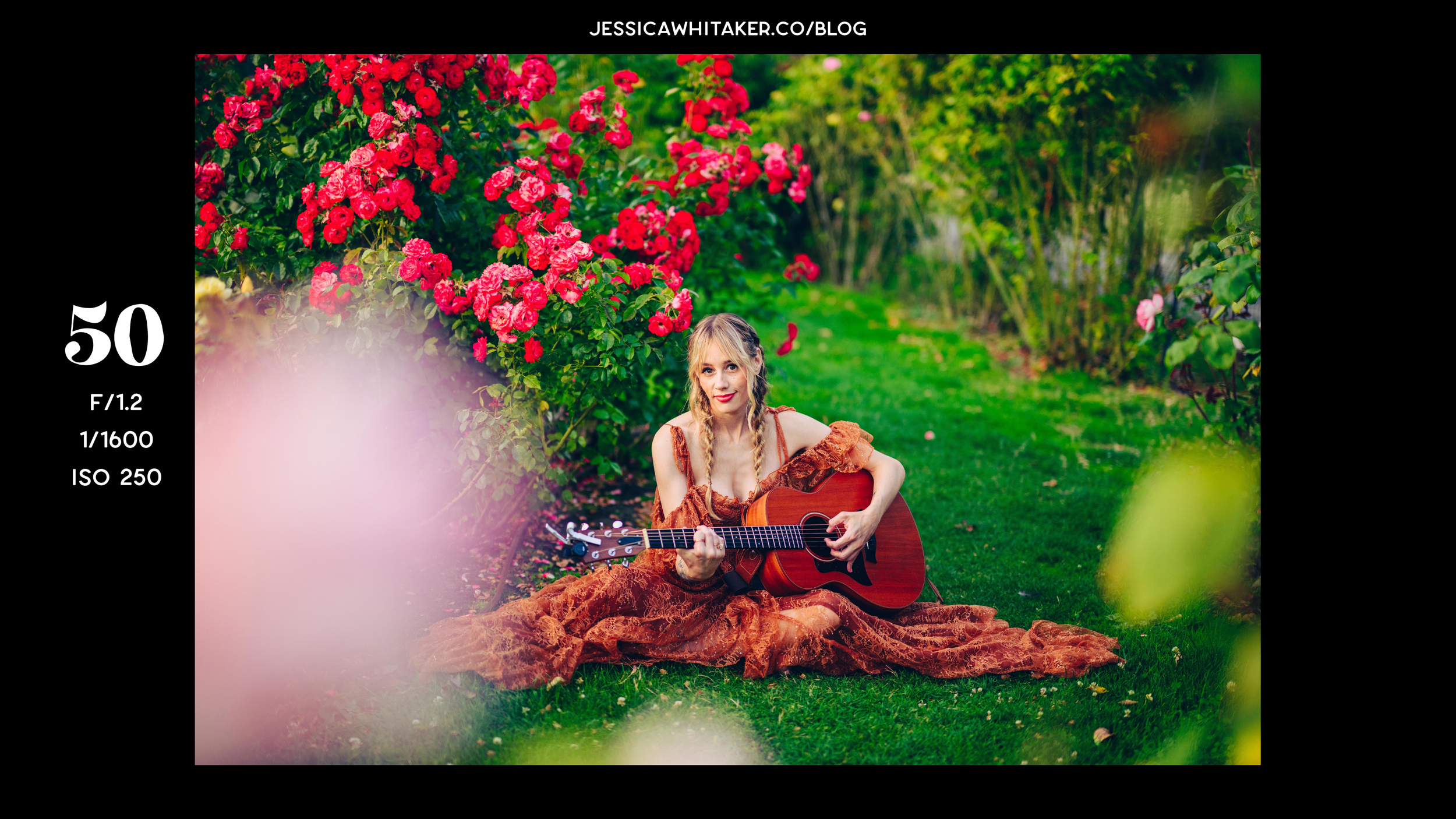
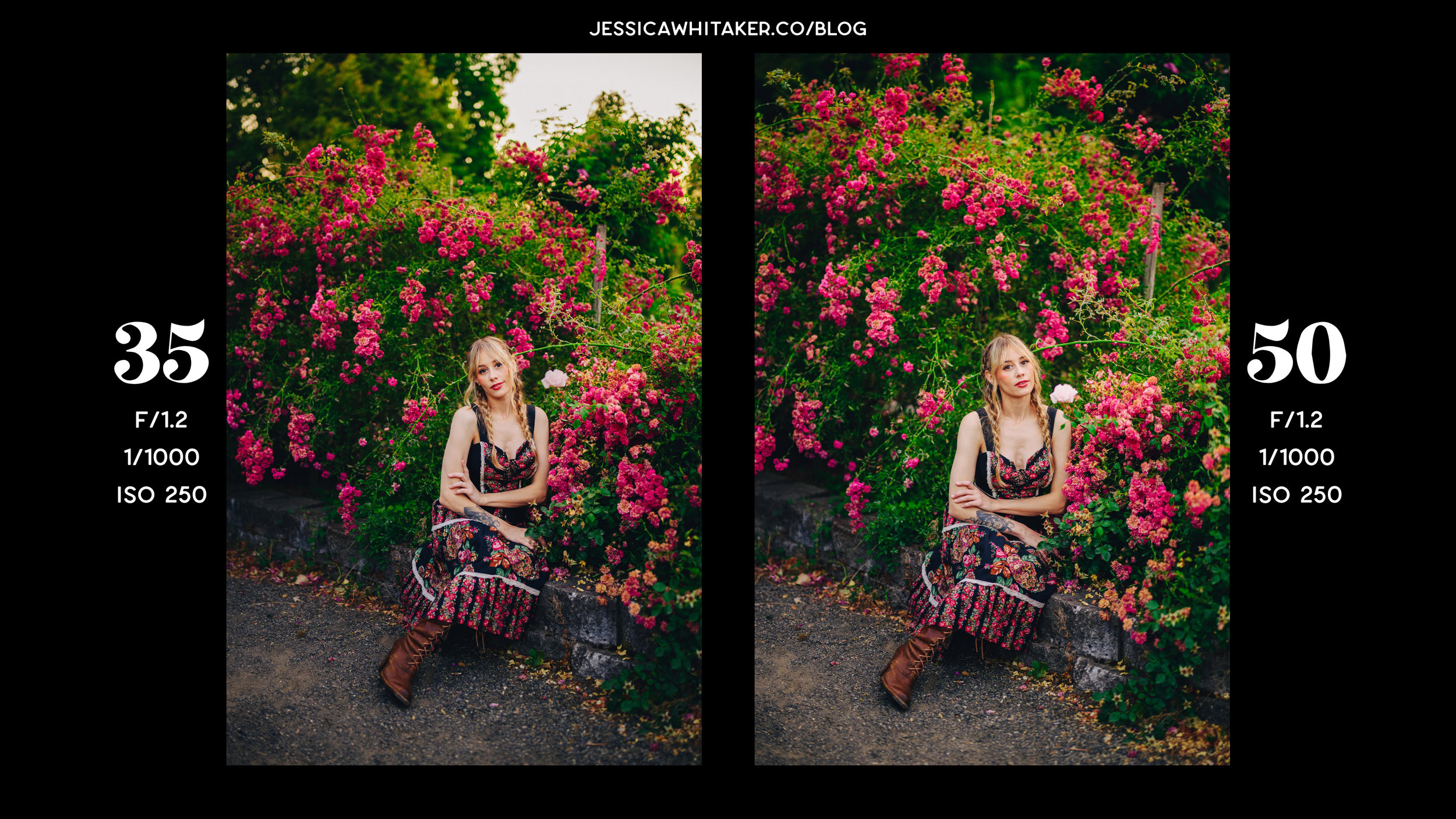
Since a 50mm is a longer focal length than a 35mm, it has more compression. The background gets magnified and pulled in, which makes the blur look softer and creamier, even when you're using the exact same aperture on both lenses.
35mm vs 50mm Compression Example
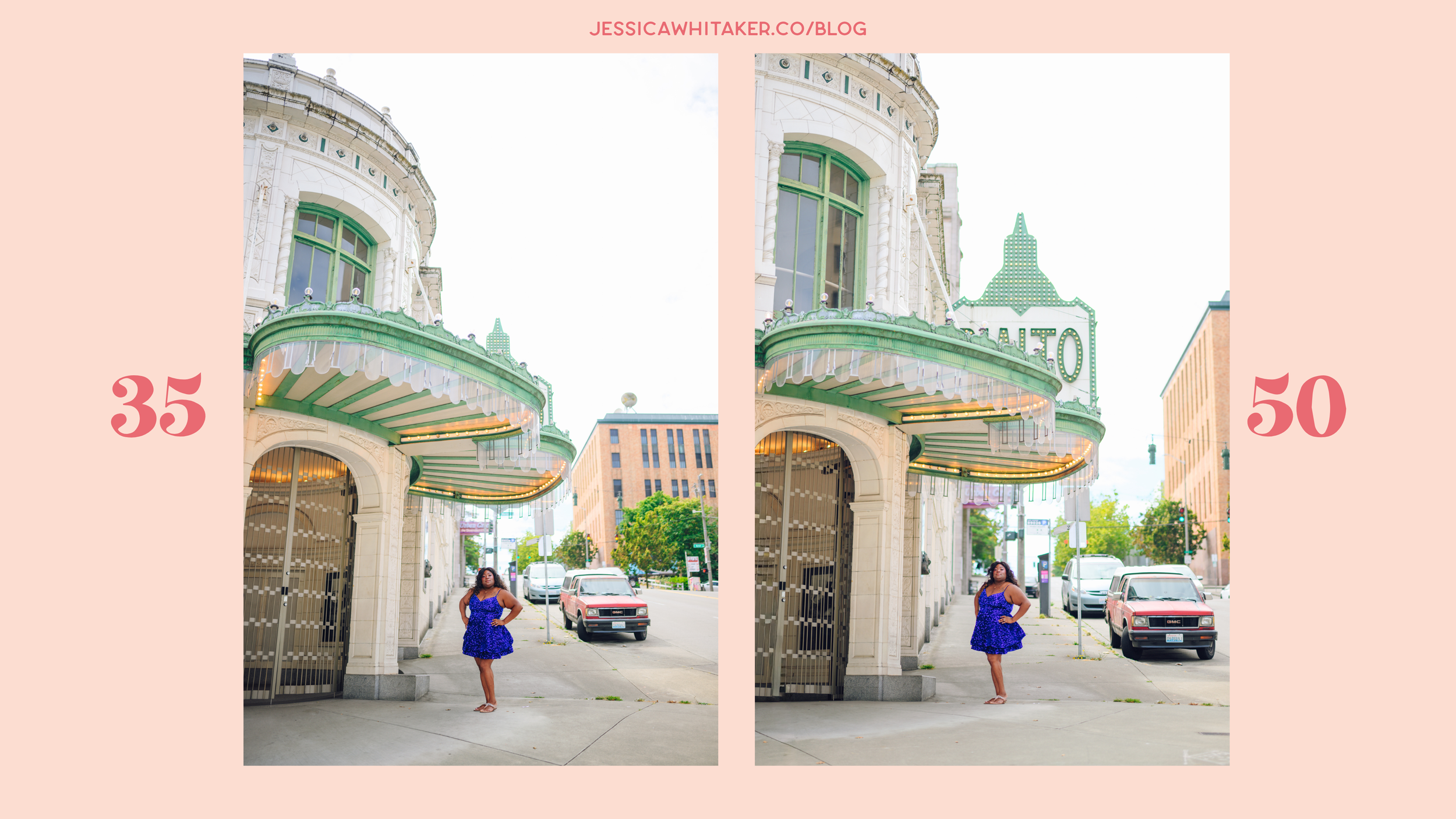
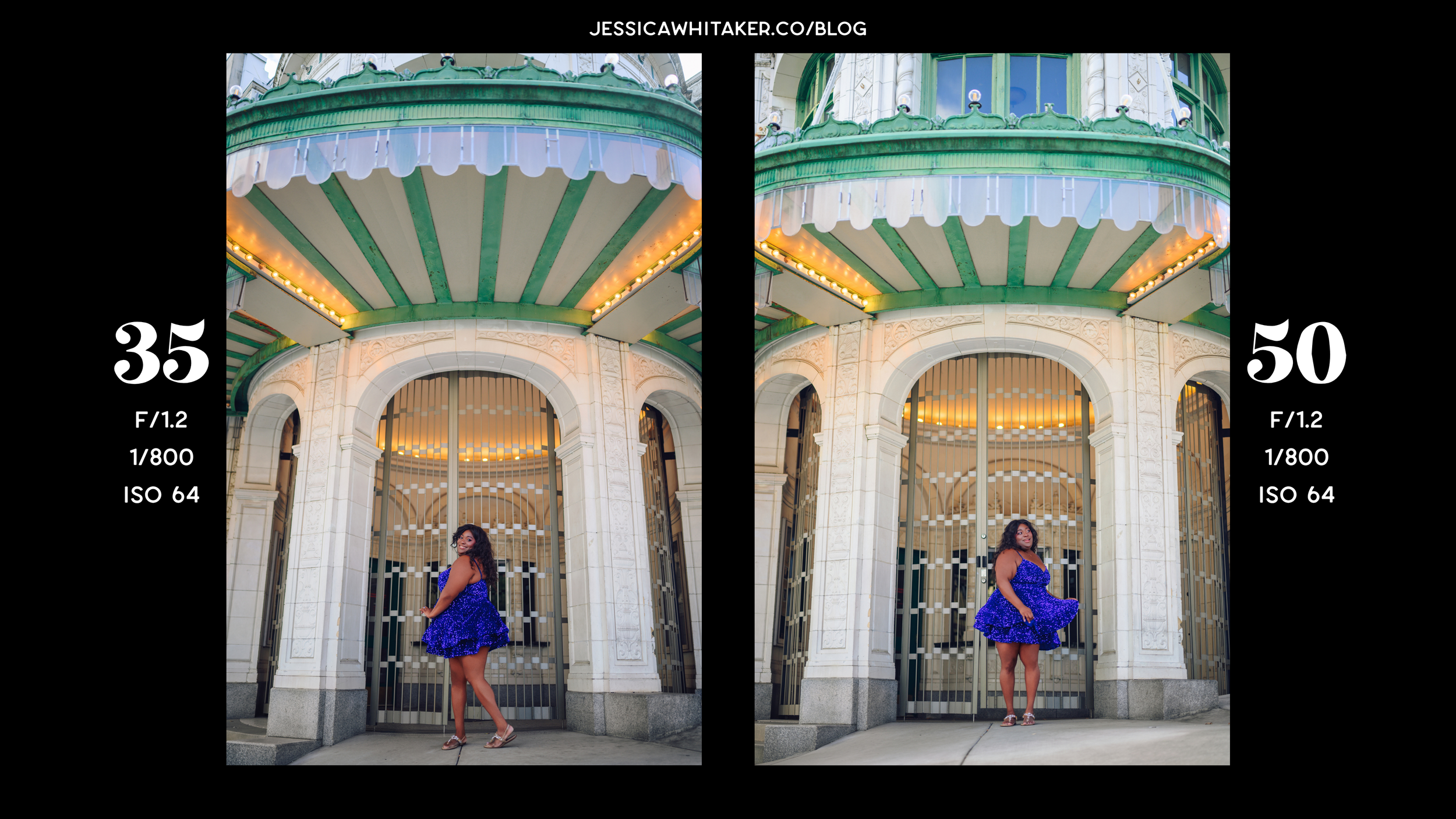
For this comparison, I stood at different distances with each lens so my model would be framed the same way in both photos. The canopy over the theater entrance flares out from the building, and with the 35mm, I'm standing close enough that the underside of that canopy gets exaggerated and takes over a huge part of the frame, while the sign above it nearly disappears. With the 50mm, that gap starts to close, so you lose some of the overpowering canopy and see more of the sign.
What Is Field of View?
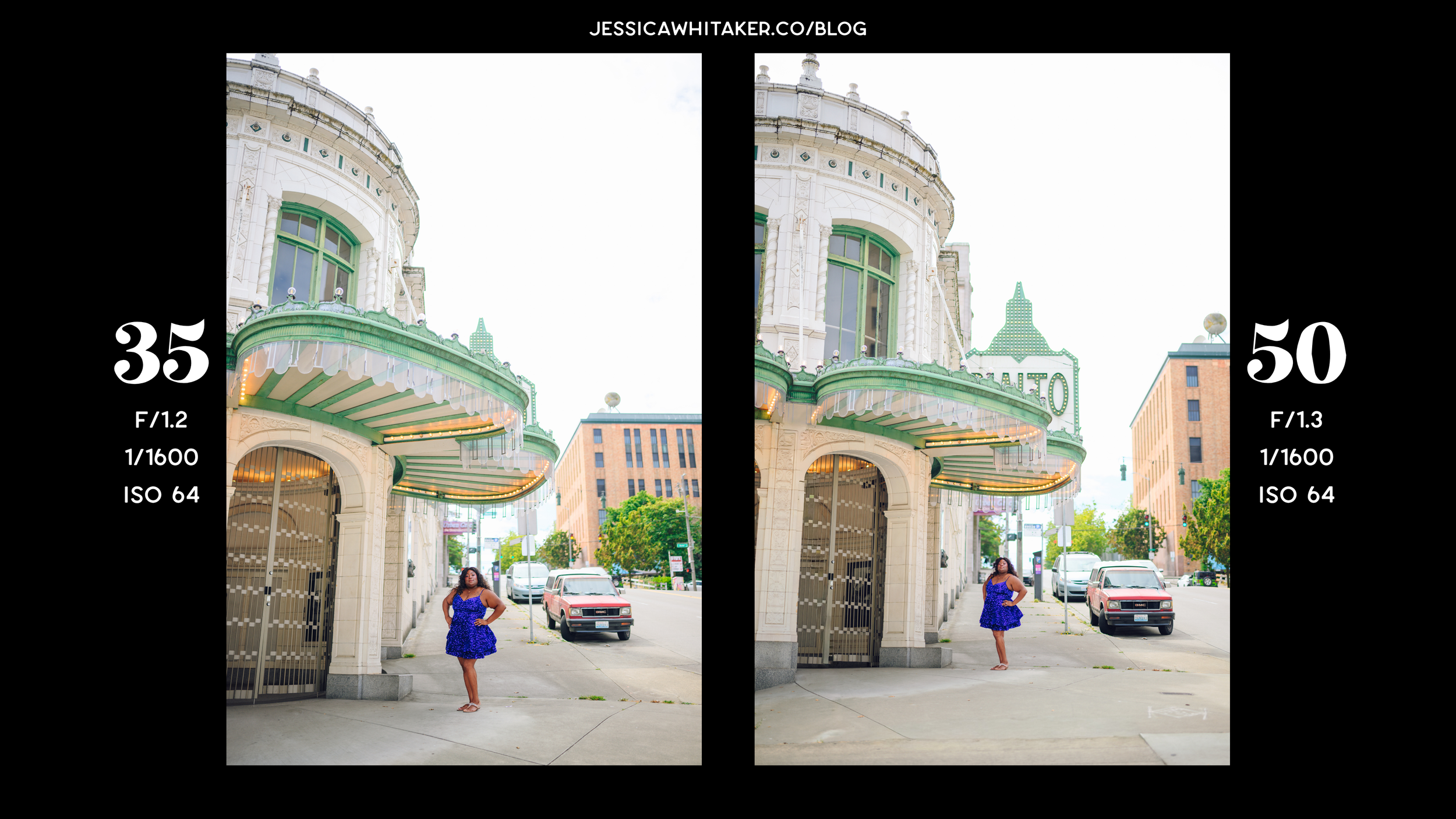
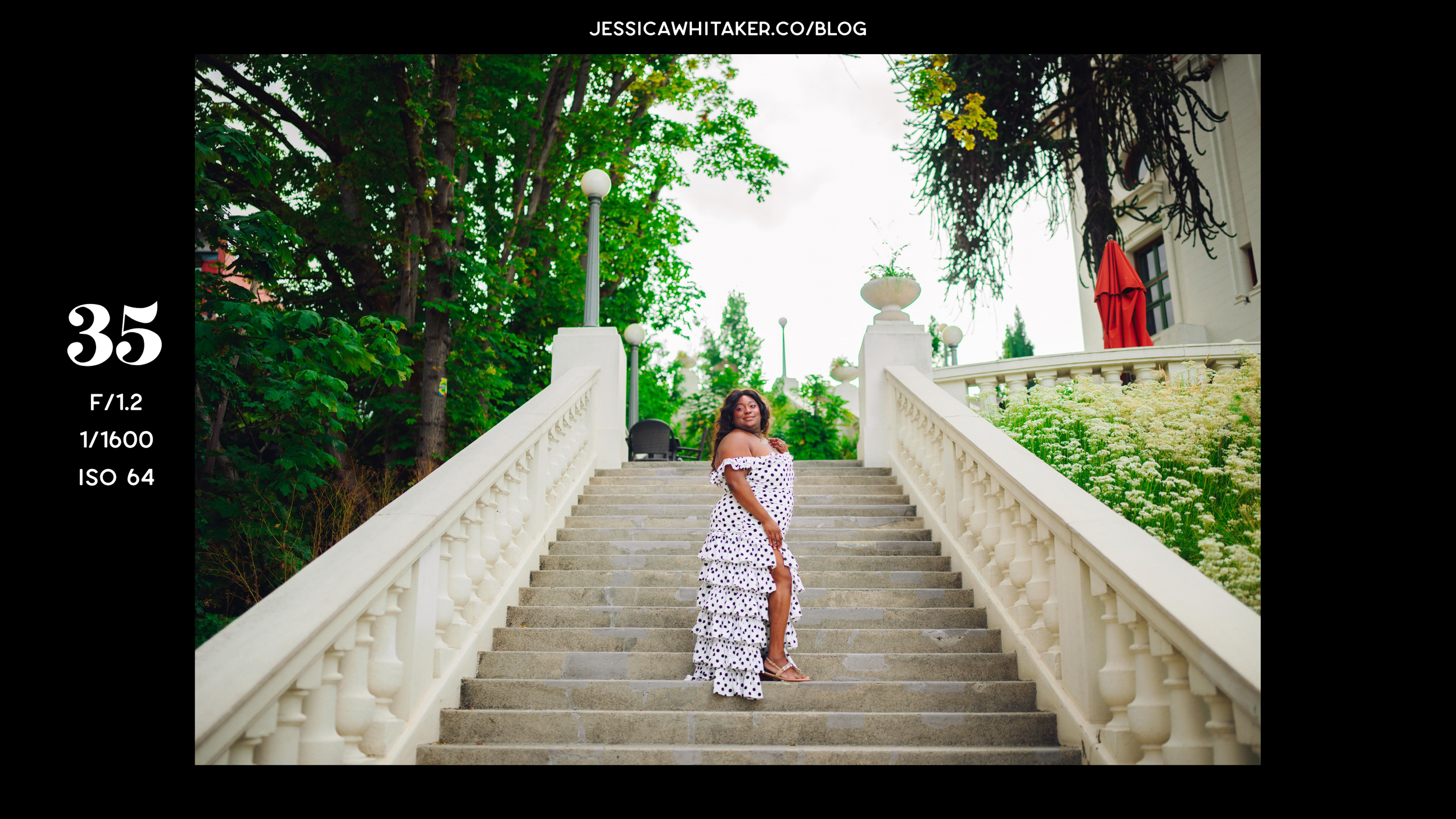
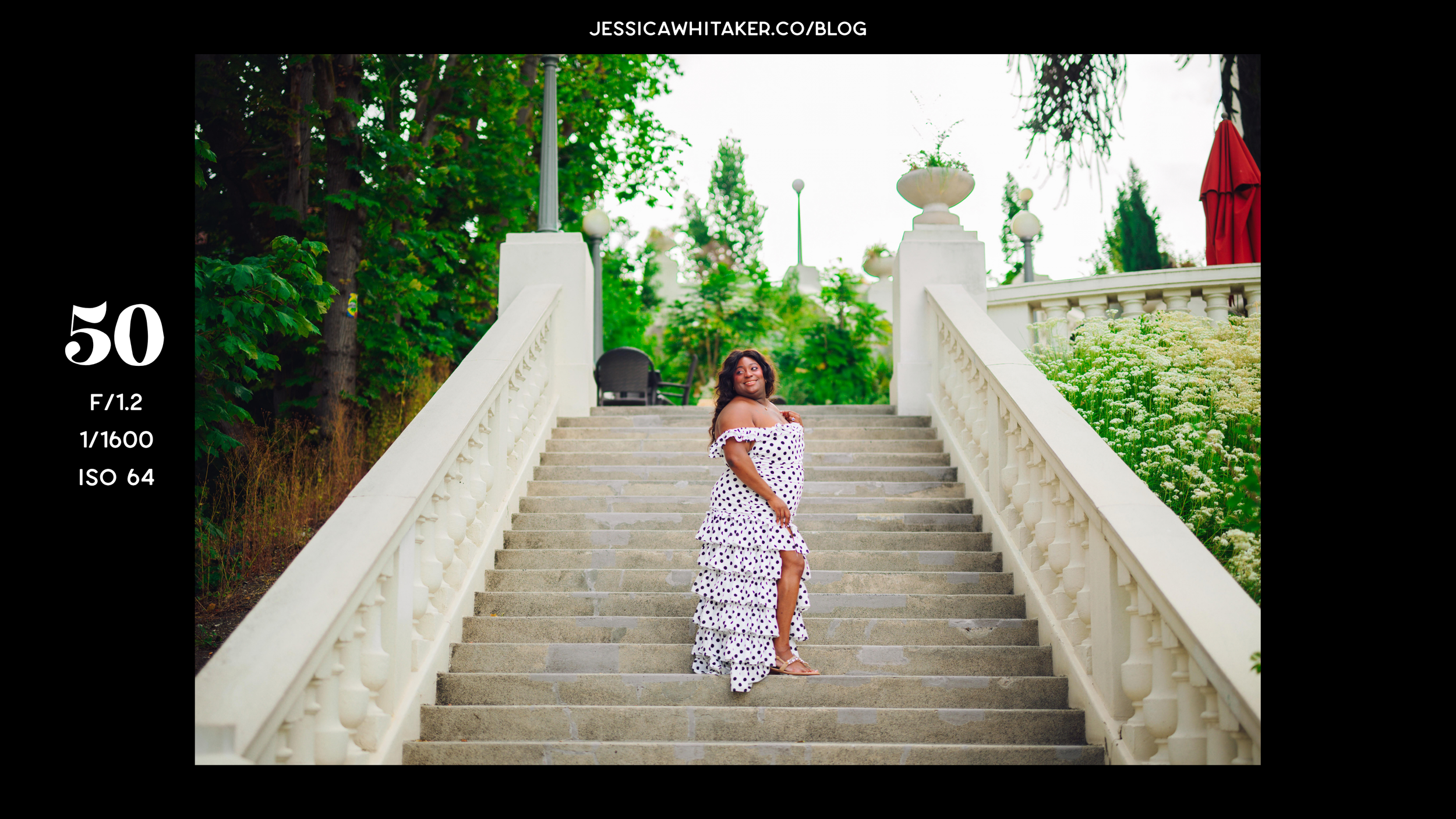
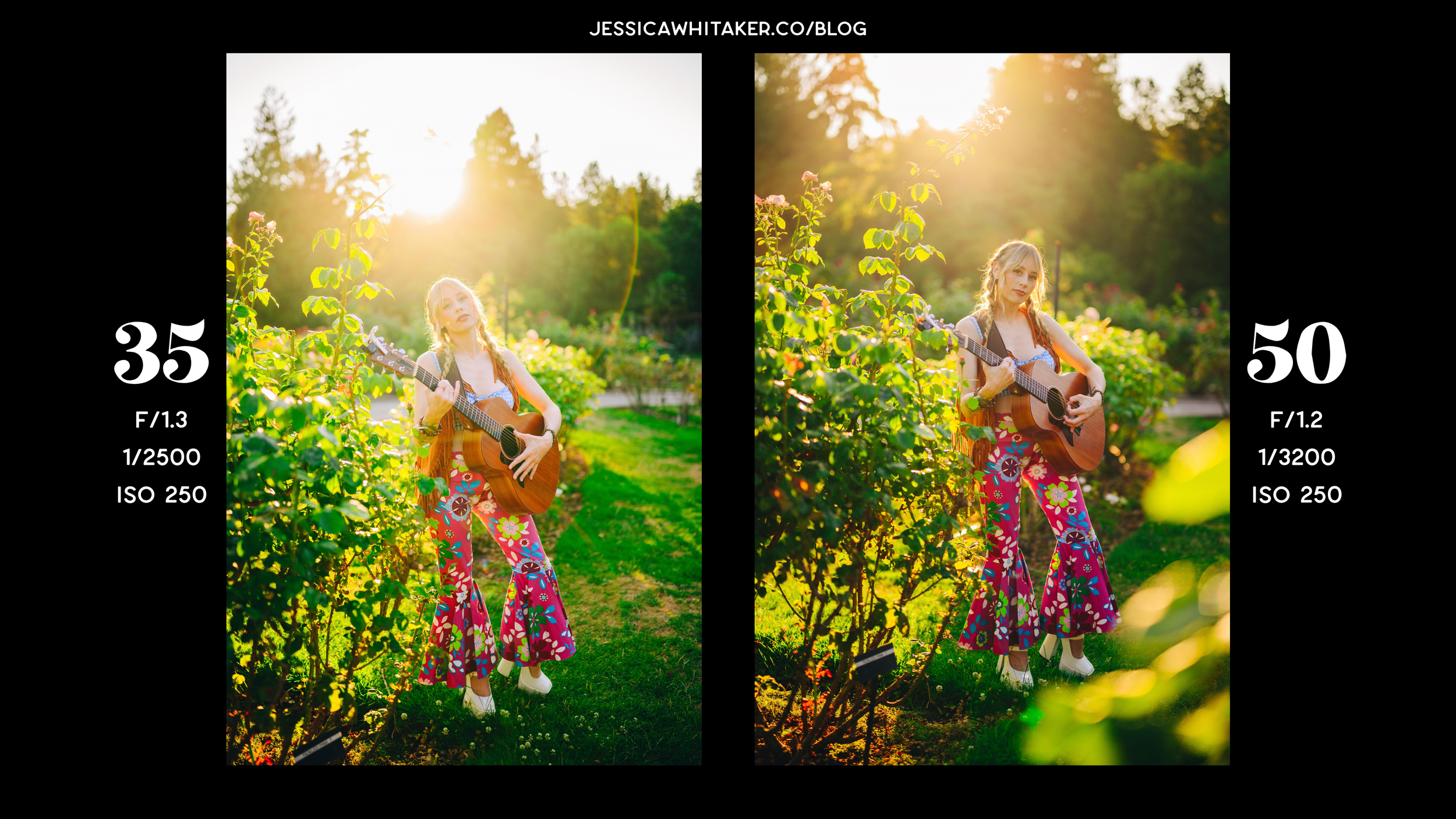
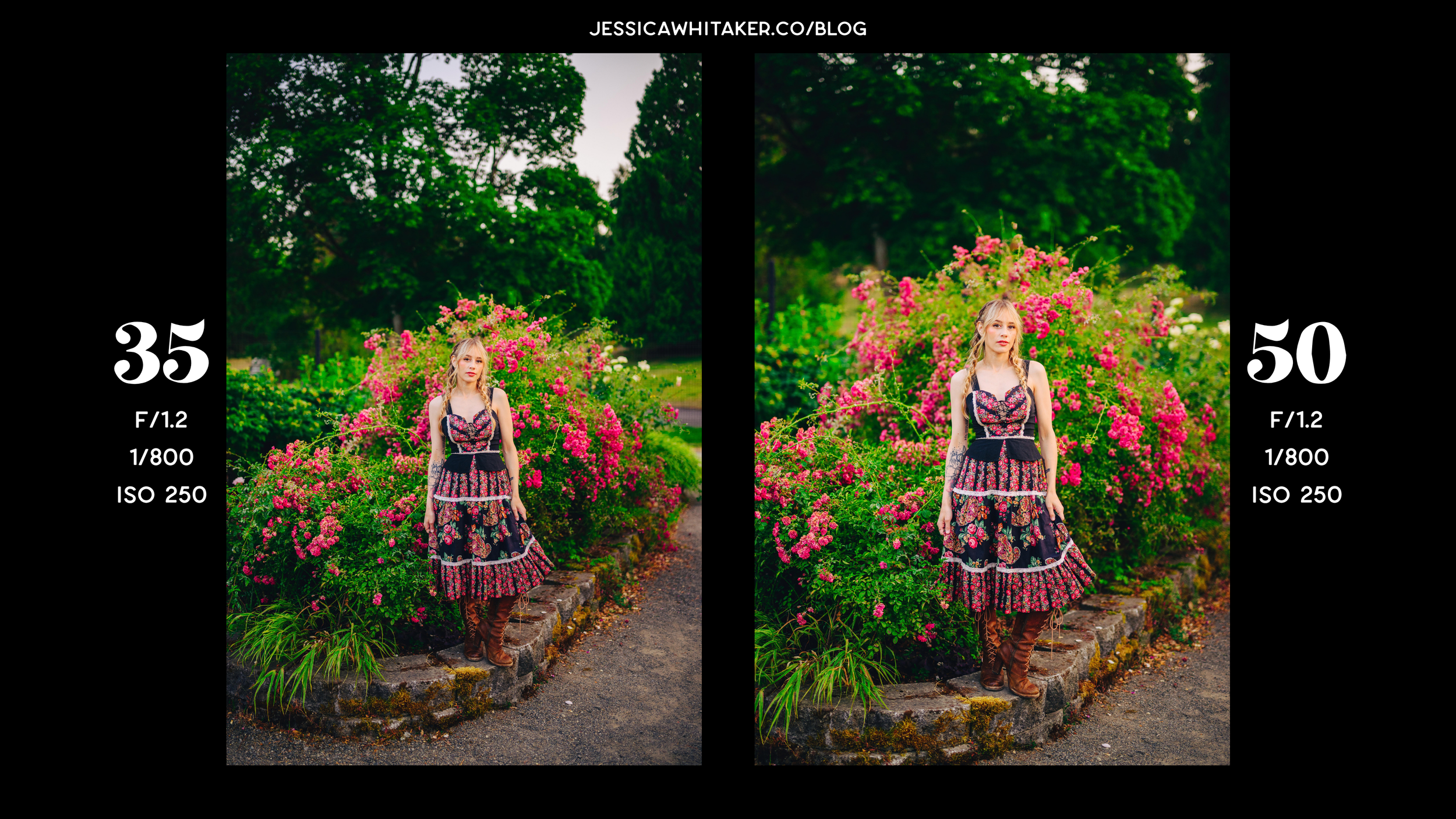
Field of view is how much of a scene a lens takes in from one exact spot. A wider lens like the 35mm captures more of the scene, and a narrower lens like the 50mm captures less.
For these two photos, I didn't move at all between shots. With the 35mm, you can see much more of the building, the street behind her, and even a truck parked on the corner (which I'd edit out if these were going to a client). With the 50mm from that same spot, the frame tightens right up, leaving mostly the canopy and the entrance behind her.
35mm Lens Distortion: What You Need to Know
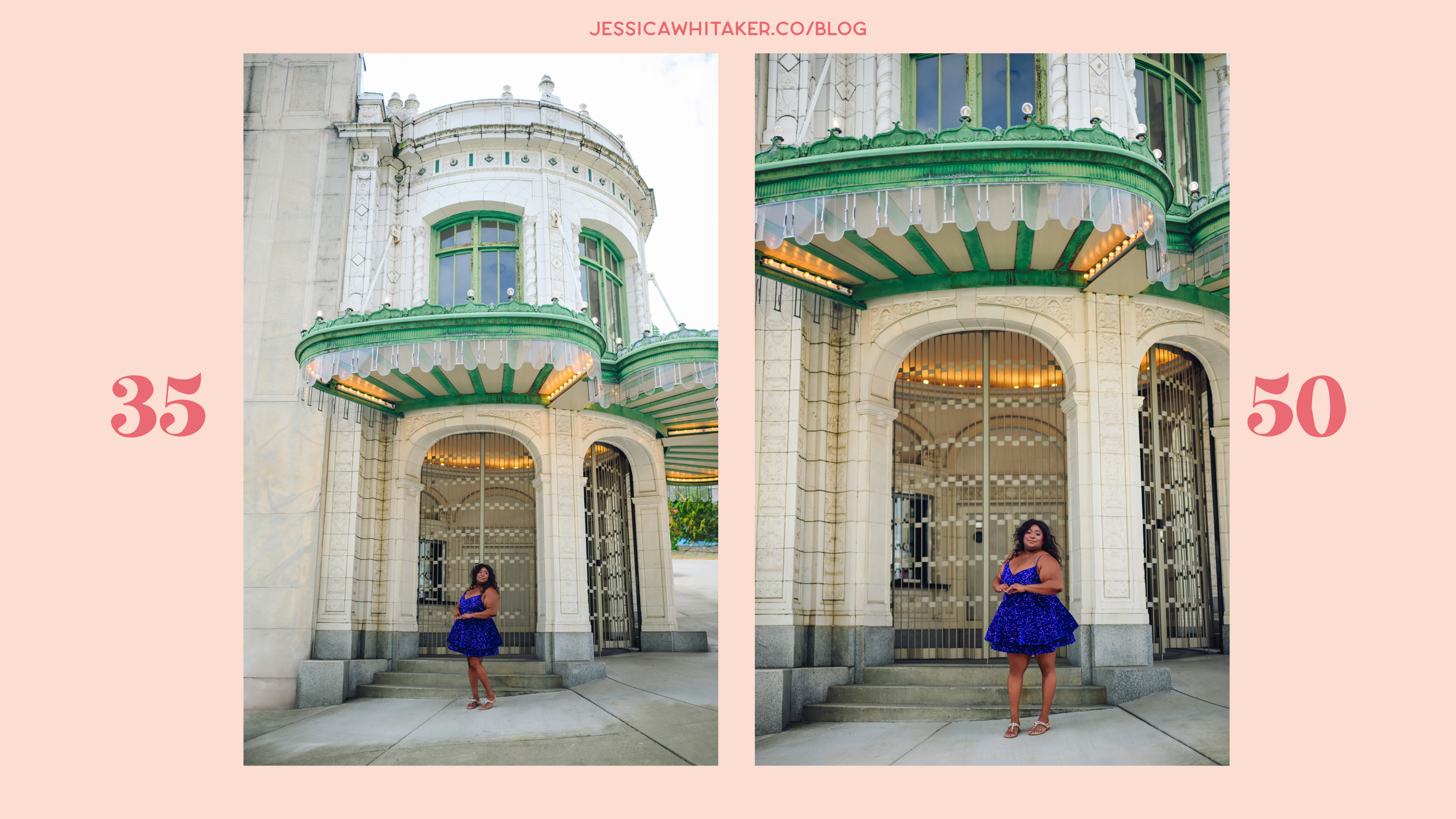
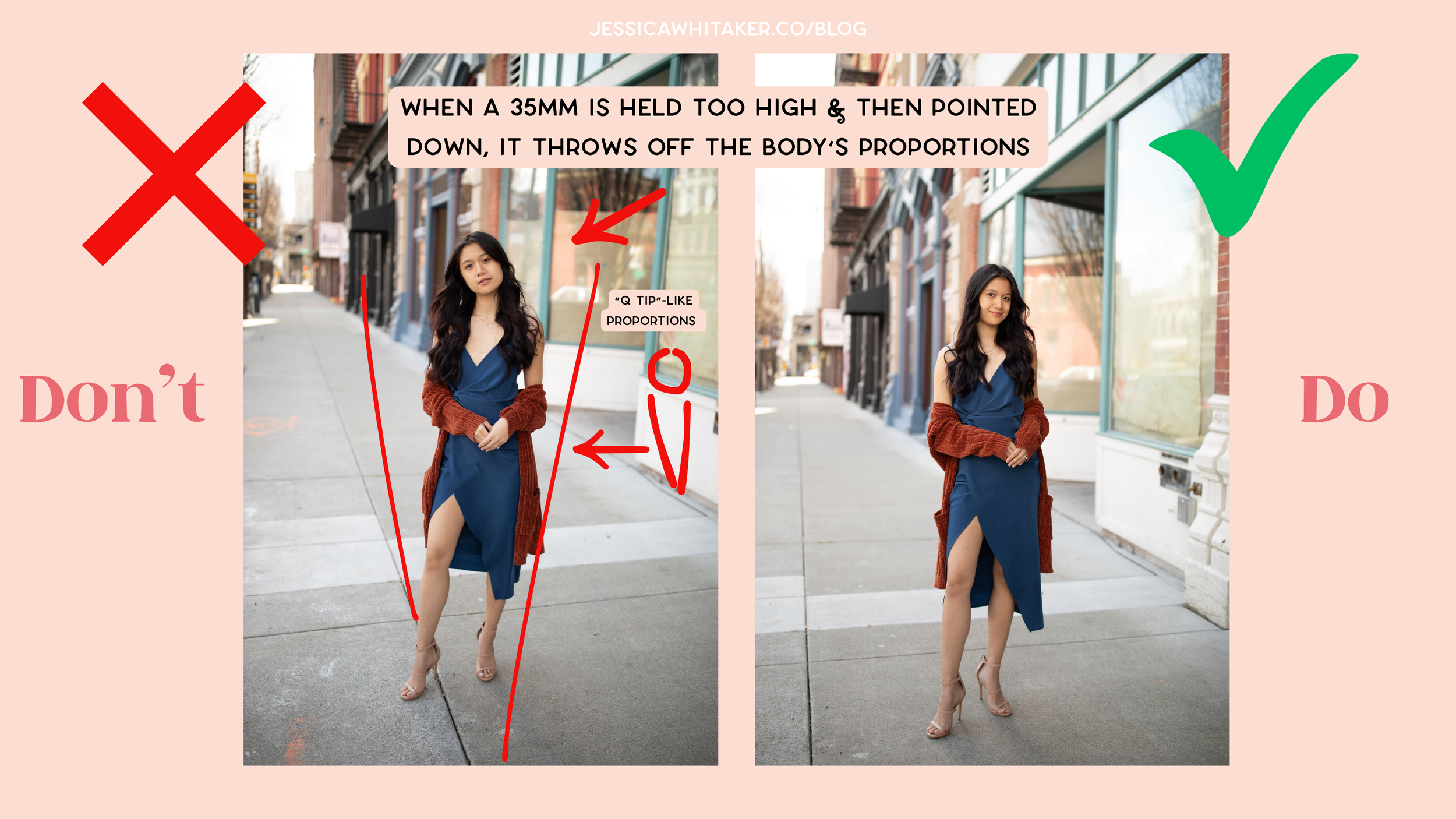
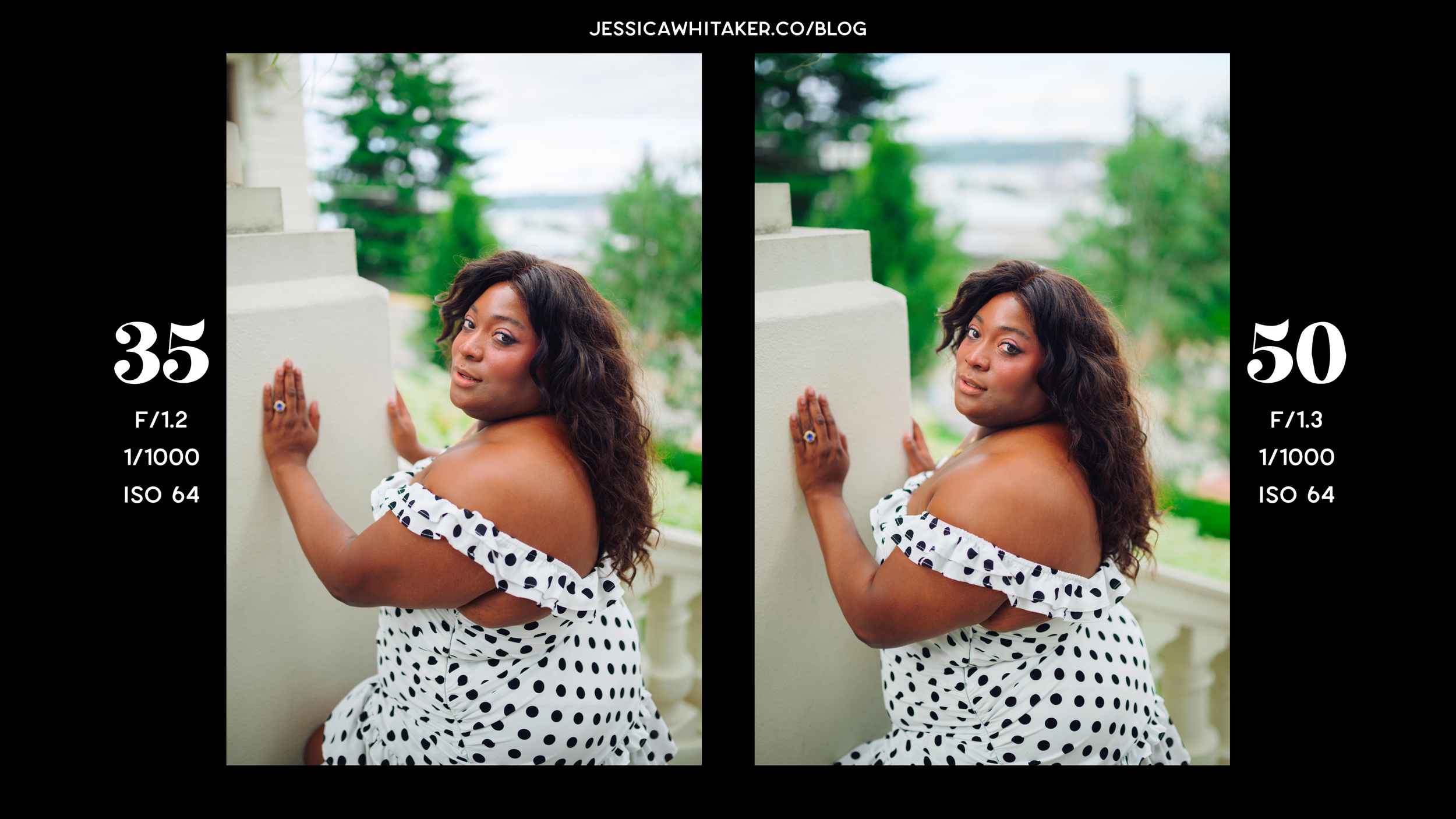
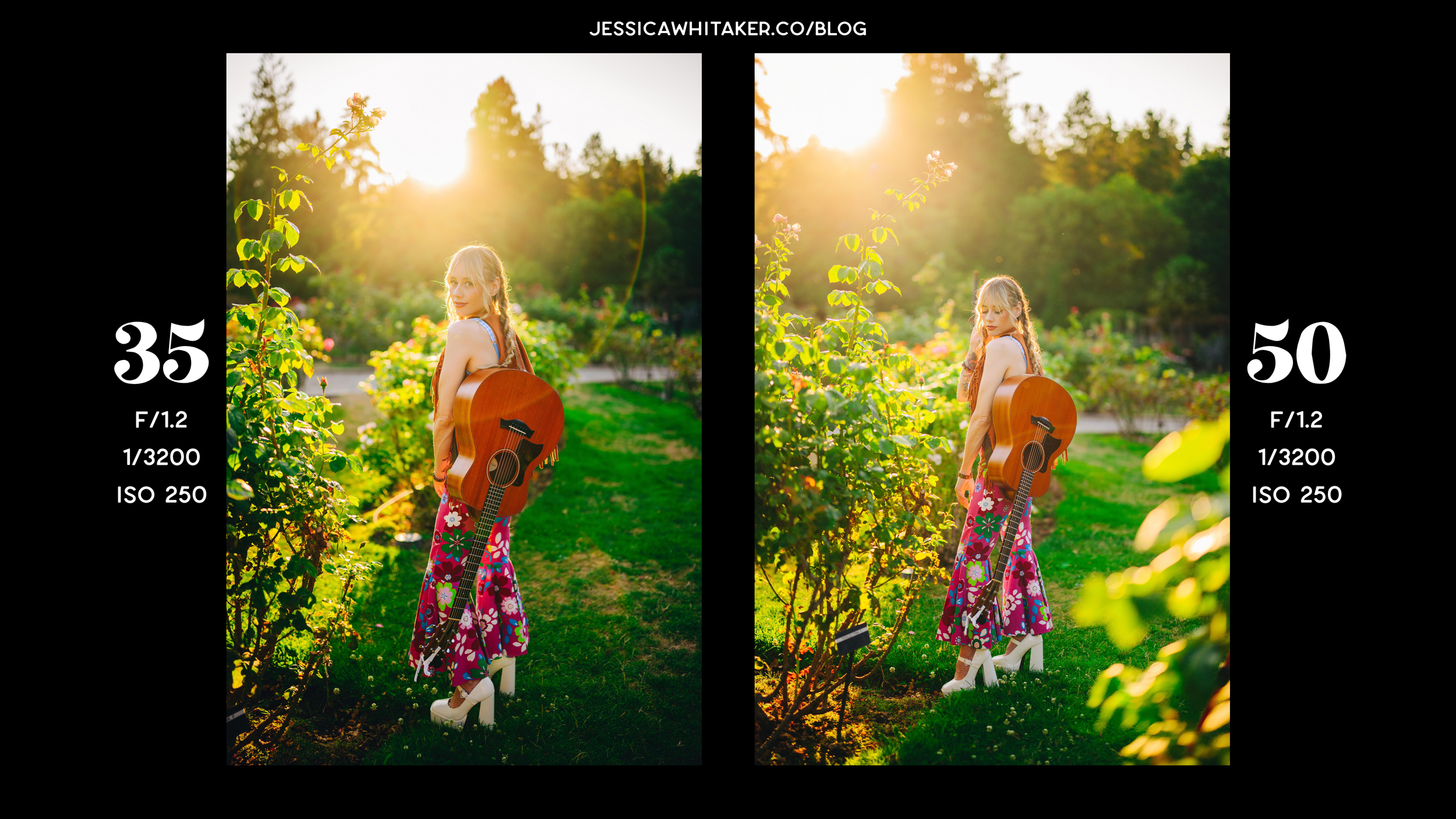
Distortion is the warping that happens when a wide lens stretches or bends what's in your frame, and it's strongest toward the edges and corners. With a 35mm, you might notice the four corners of the frame pulling inward, facial features looking wider when you're close up, and full-body images looking stretched if your camera angle is off. Sometimes you can play that stretch up on purpose, but other times it can make your subject look like a Q-tip.
This distortion isn't unique to the Nikon S lens. It's a characteristic of the 35mm focal length itself, so you'll see it with any brand.
How to Manage Distortion with a 35mm
The biggest thing you can do is keep your camera level and parallel to the ground instead of tilting it up or down. If you hold the camera high and angle it down toward your subject, especially for close-up portraits, you risk shortening and widening their proportions. It also helps to keep your subject closer to the center of the frame, even just an inch or so in from the sides, since the warping is strongest in the four corners. You can correct some distortion in post-processing, but only to a point, so getting your framing and camera angle right in-camera matters more.
The 35mm look is distinct, and that's neither good nor bad. It comes down to personal preference, and there are no rules to photography despite what some corners of the internet might say.
Distortion on the 50mm
A 50mm doesn't distort as much as a 35mm. You can still correct lens distortion in Lightroom using the lens profile correction checkbox, which pushes the four corners of the frame back out. A lot of the time I leave it unchecked, though, because I like the slight dark vignette it creates around the edges.

Using the 35mm to Exaggerate Legs
You can use that 35mm stretch on purpose to make legs look longer. In these side-by-side images, I had my subject fill the frame from top to bottom to exaggerate her legs and add some drama. With the 50mm, her proportions stay natural, so the attention lands on her instead of on the stretched legs.
How to Use a 35mm to Create Movement & Emotion
One big advantage the 35mm has over the 50mm is that it can create a sense of movement in your images, depending on your setting. This is one of the main reasons I'd choose a 35mm over a 50mm in certain situations.
Cherry Blossom Photoshoot with a 35mm
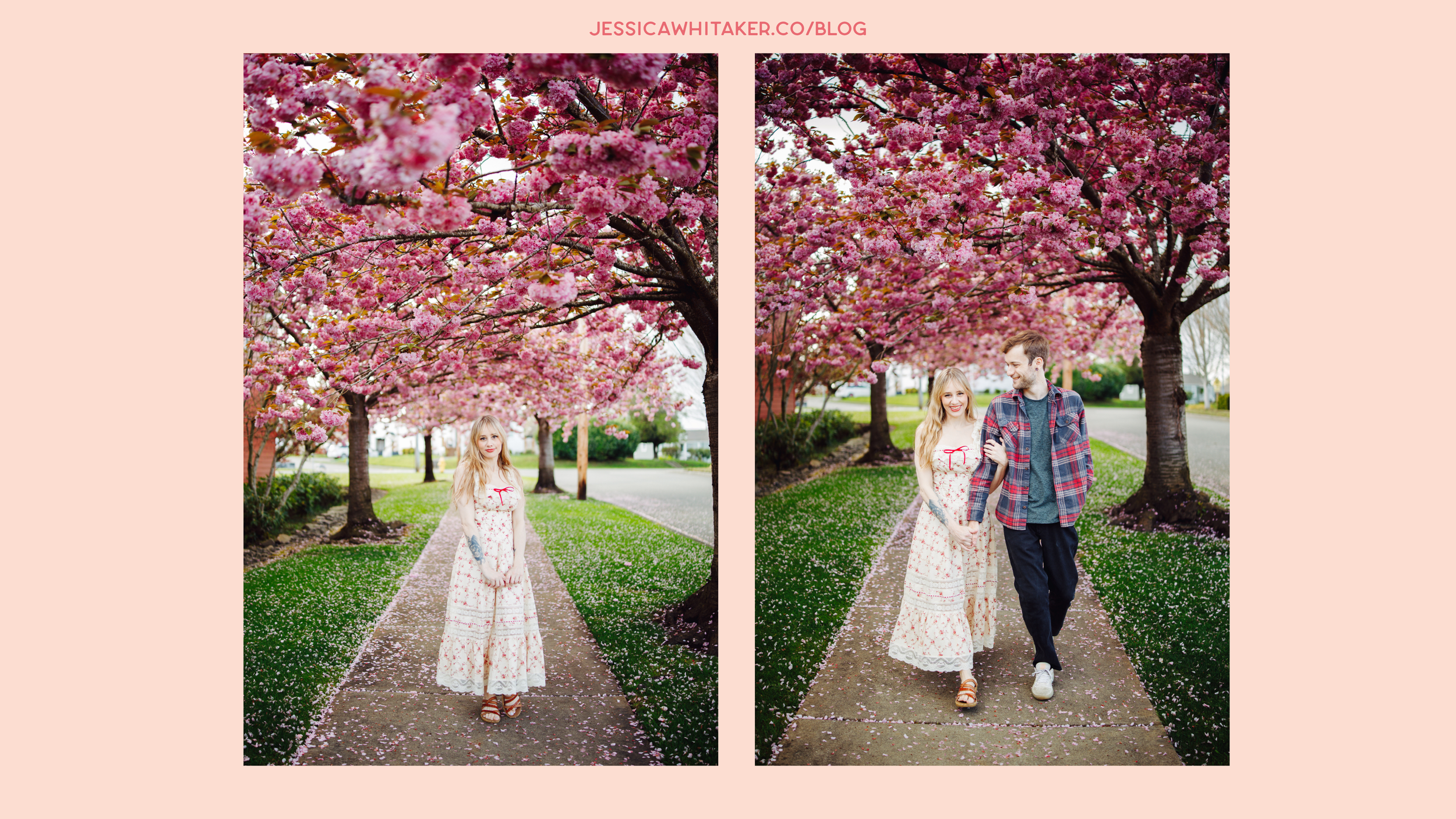
These cherry blossom trees are planted close together along a narrow path, and they're trimmed so they're top heavy, which creates a cloud of pink above my subjects like a ceiling. With the 35mm, I'm capturing more of the ground, and since the ground is covered in pink petals, the whole scene looks dramatic and magical. That's the same characteristic that might frustrate me in a city, where I'd want more of the buildings and less pavement, but here I can play it up. Paired with the couple in the frame, it feels like they're in their own little world, both because of the romance between them and because of how the scene wraps around them visually.
Using the 35mm Wide Angle for a Whimsical Look
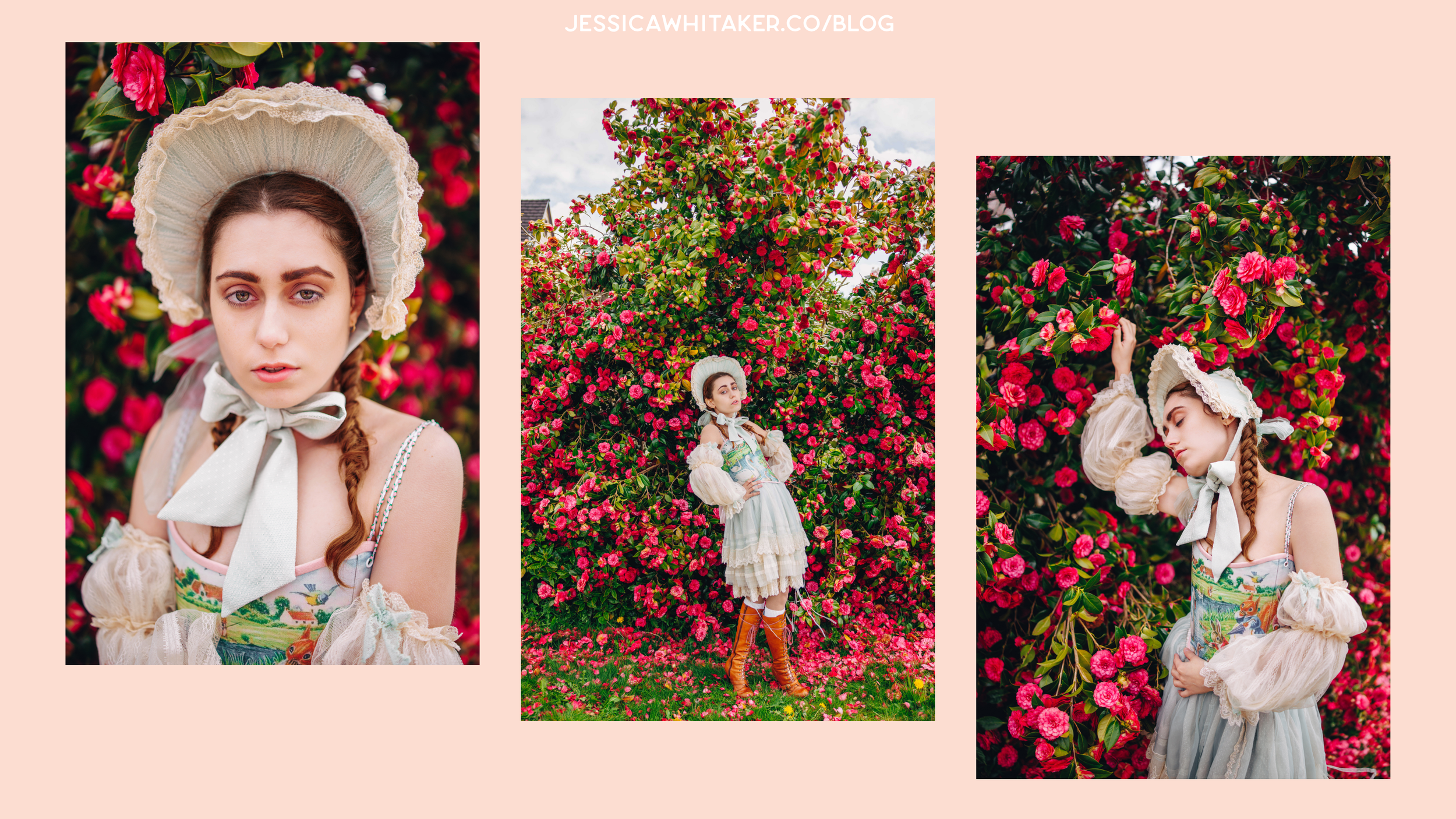
The 35mm makes the background look further away than a 50mm does, but it also stretches it. In these images, my subject is standing against an overgrown camellia bush that curves over at the top, and with the 35mm, the bush looks like it's enveloping her. The wide angle accentuates that arching shape and gives it a sense of movement, and the fanned-out brim of her bonnet gets emphasized even more. Together, those two elements create a whimsical look that the 50mm can't recreate, which is a great example of using distortion to your advantage.
35mm vs 50mm Price Comparison
The Nikon S
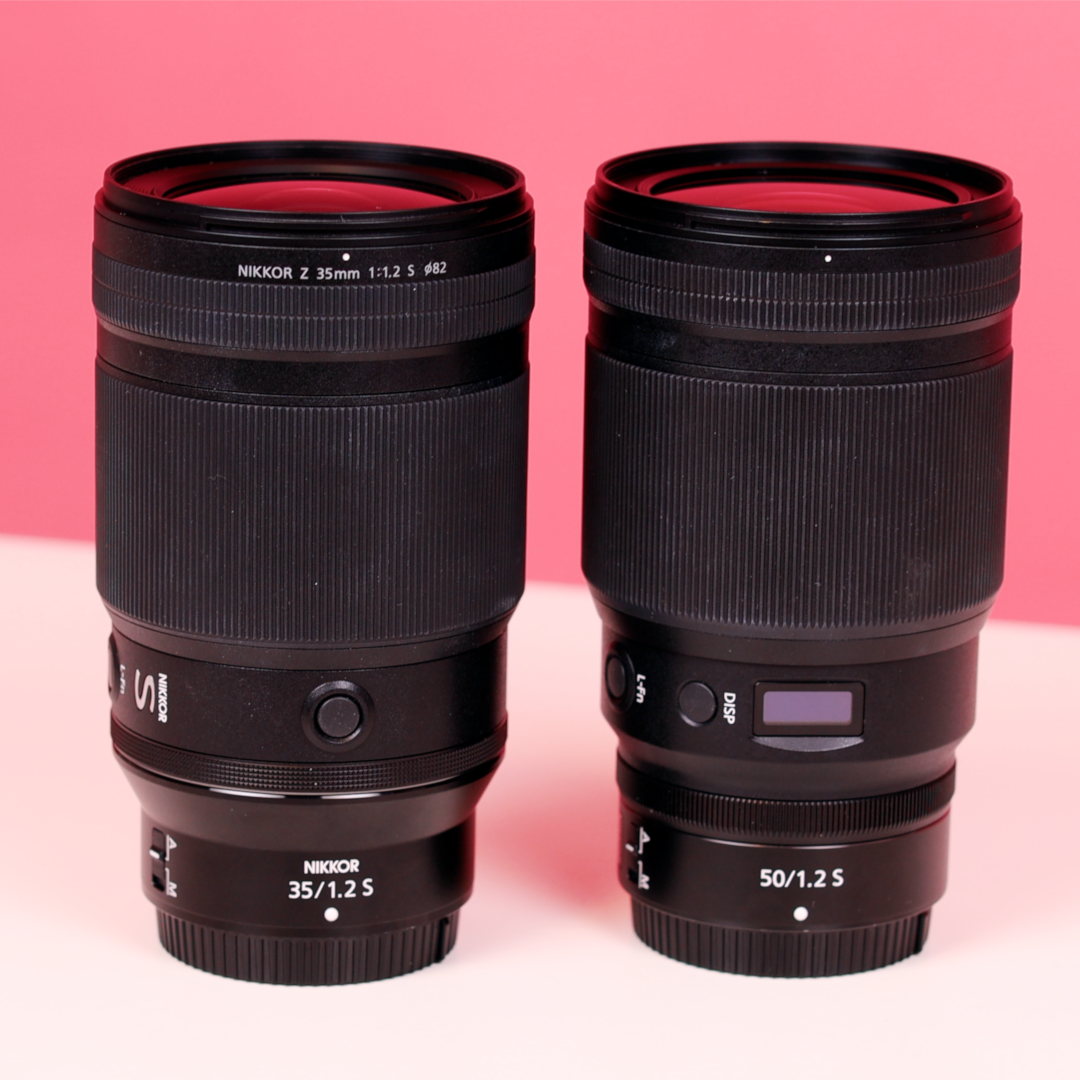
Nikon Z 35mm f/1.2 S Lens
Buy used on KEH: $2,400 in Like New
Canon's version: Canon doesn't make a 35mm f/1.2 RF lens, but the RF 35mm f/1.4 is $1,600
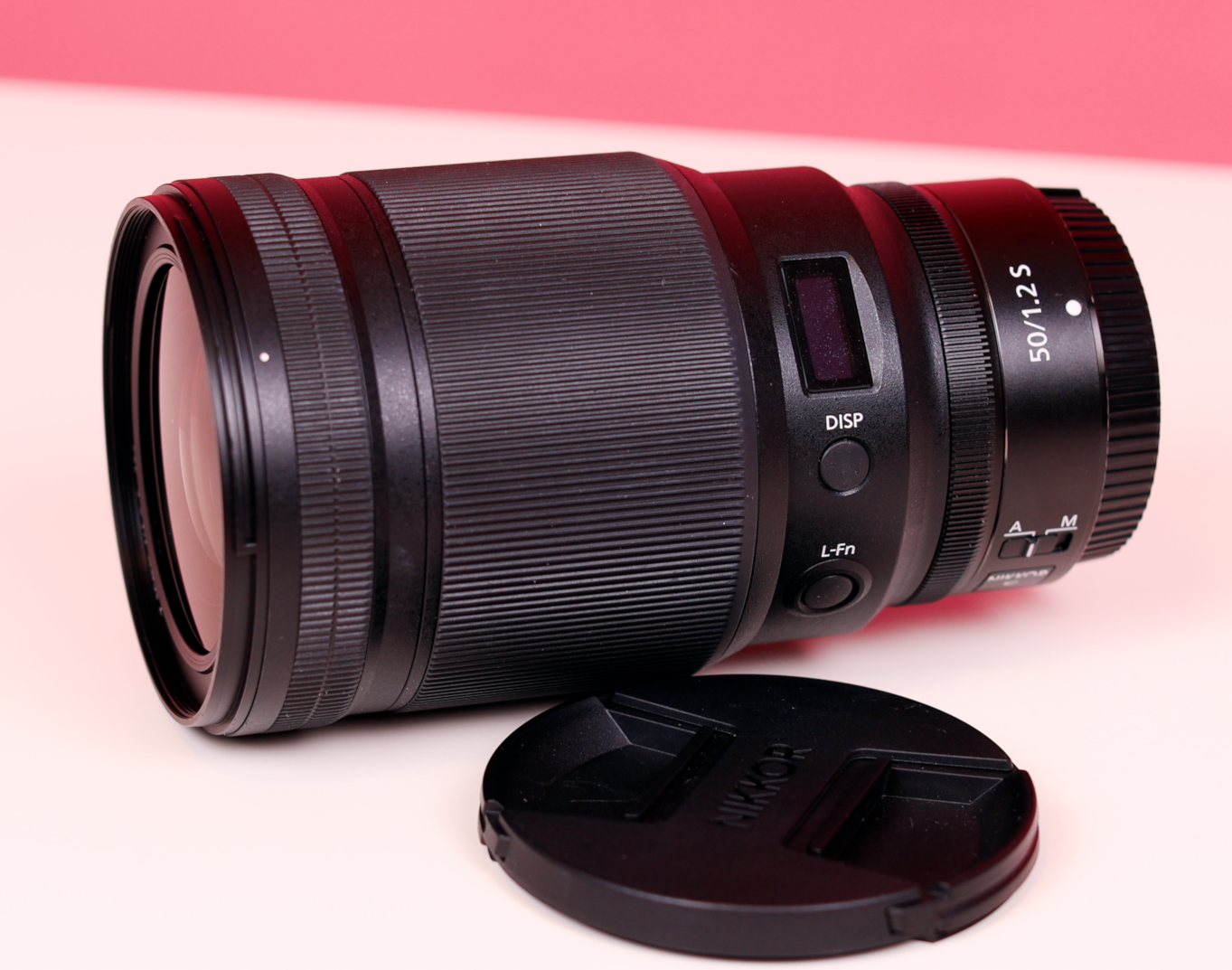
Nikon Z 50mm f/1.2 S Lens
Buy used on KEH: $1,500 in Excellent Plus
Canon's version, the RF: $2,600
Budget-Friendly & Third-Party Lenses
If you don't see yourself using a 35mm as often as a 50mm, it may not be the most practical investment to buy the name-brand version from Nikon or Sony, and a third-party lens from a brand like Tamron or 7Artisans could be a better fit at a much lower price. Sony and Nikon license their mirrorless lens mounts to third-party brands, which gives you more affordable options. Canon doesn't license its mirrorless mount, so Canon photographers are limited to the RF lineup (or an adapter with an EF lens).
Tamron's 35mm f/2.8 for Sony E-mount is about $250 new, or around $170 used on KEH. At the moment, Tamron doesn't make a 35mm or 50mm prime for Nikon Z mount.
Why I Buy Used Gear on KEH
Whatever lens you choose, buying secondhand is a great way to save, and KEH Camera is where I trust buying used, with savings of up to 40% off retail. When you buy from an auction site or a social media marketplace, you're trusting the seller blindly, and you don't always know what you're spending your hard-earned money on. Every piece of equipment that goes through KEH's warehouse is inspected, tested, and rated on a transparent scale from Like New all the way down to Bargain. I bought my own Canon EF 85mm f/1.2 in Bargain condition, which just means it has some cosmetic wear that doesn't affect the glass or image quality.
KEH also lets you sell or trade in your gear and send it in for repair. They're the only reseller with manufacturer-approved repair capabilities, which is why I'll be sending my Sigma 35mm Art to them. They've been around for over 45 years with North America's largest selection of pre-owned gear, and so many photographers in my Build and Bloom Facebook group have shared their own great experiences buying from them.
Nikon S-Line Lens Coatings
Lens coatings are thin layers applied to the glass to control how light reflects inside the lens. Both the 35mm and 50mm S lenses have Nano Crystal Coat and ARNEO Coat, which work together to cut down on that hazy, washed-out flare and the ghost-like blobs you can get when photographing toward a bright light. Nano Crystal Coat reduces internal reflections across nearly the whole range of light and is especially good at preventing reddish ghosting. ARNEO handles light hitting your lens head-on, like when the sun or string lights are inside your frame.
The 35mm adds a third coating called Meso Amorphous Coat, so backlit images stay clear and crisp even when you're photographing straight into the light.
Shared Performance Features
Both lenses are part of Nikon's S line, which means they're hybrid lenses designed to perform just as well for video as they do for photos. They're both rugged and fully weather-sealed, razor-sharp, silent, fast to focus, and incredible in low light.
Real-World Sample Images: 35mm vs 50mm Side by Side
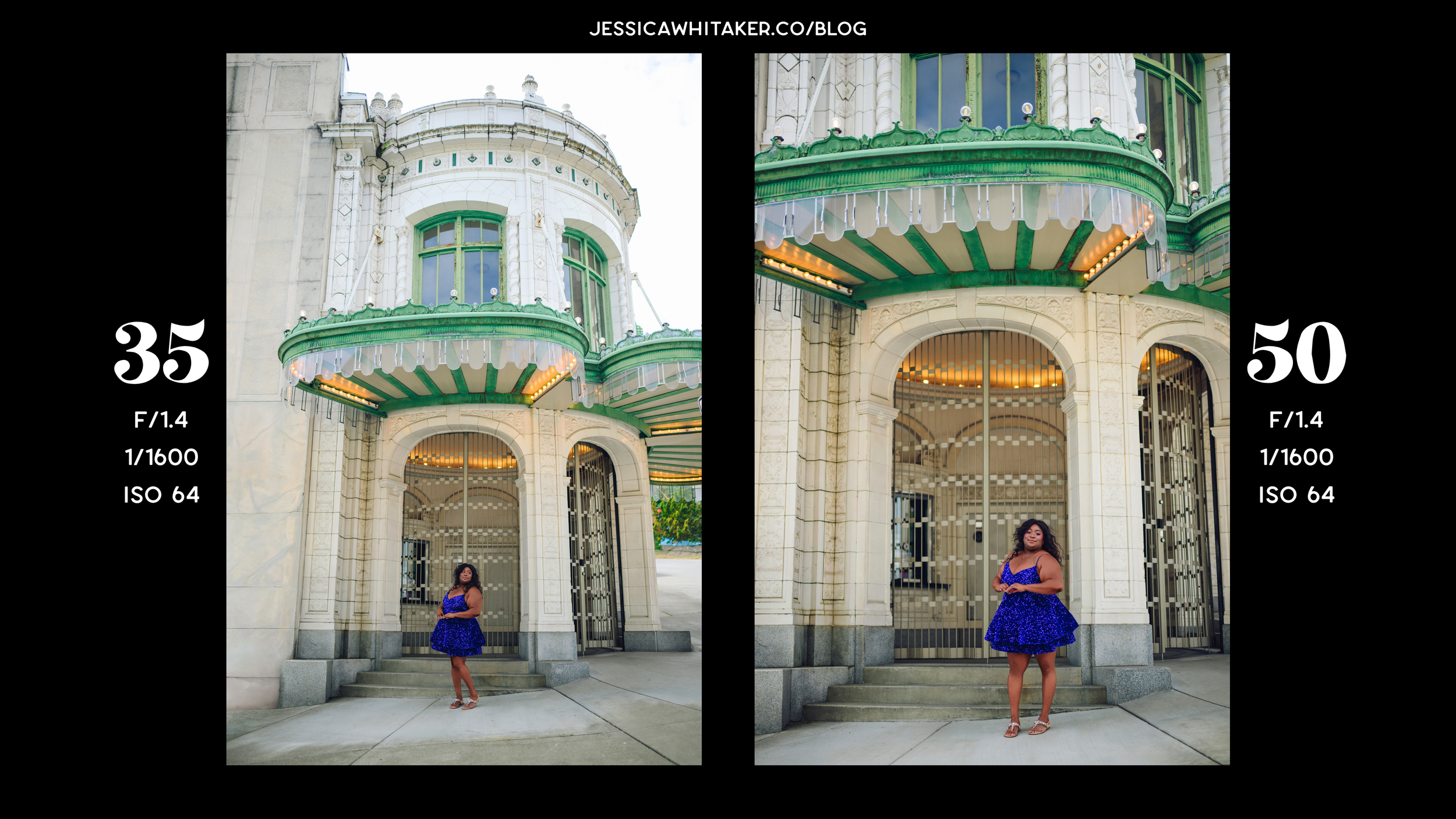
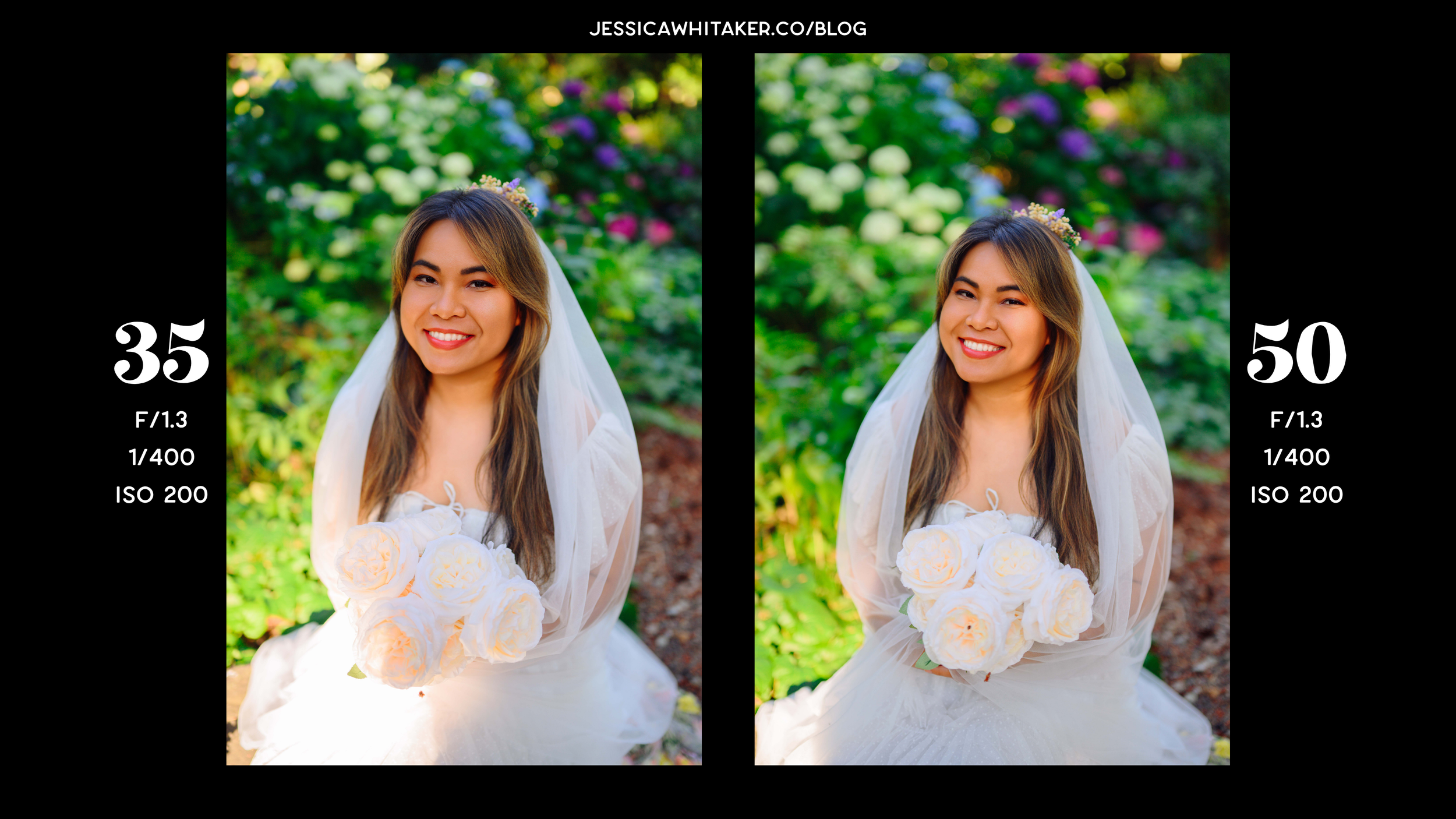
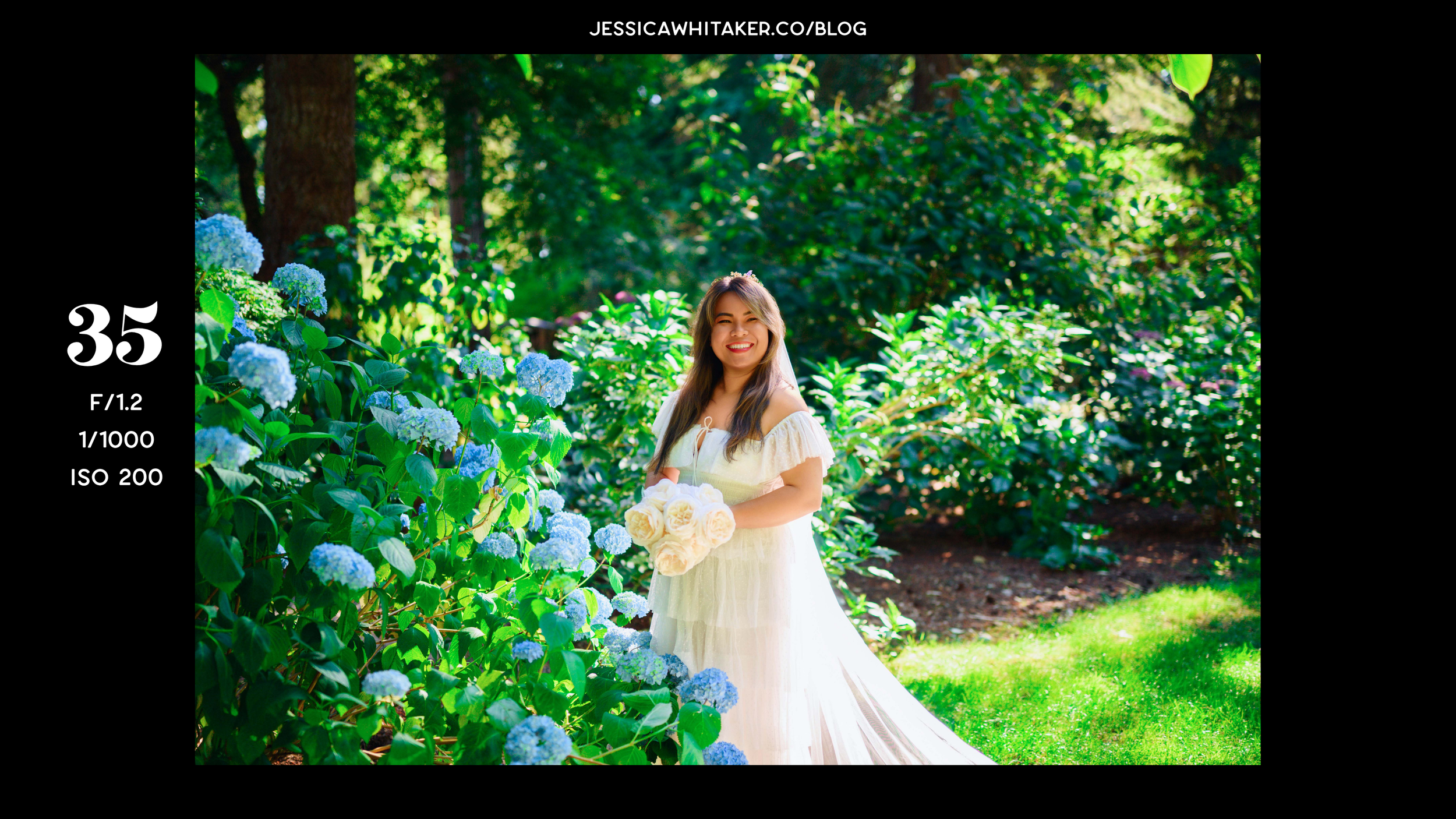
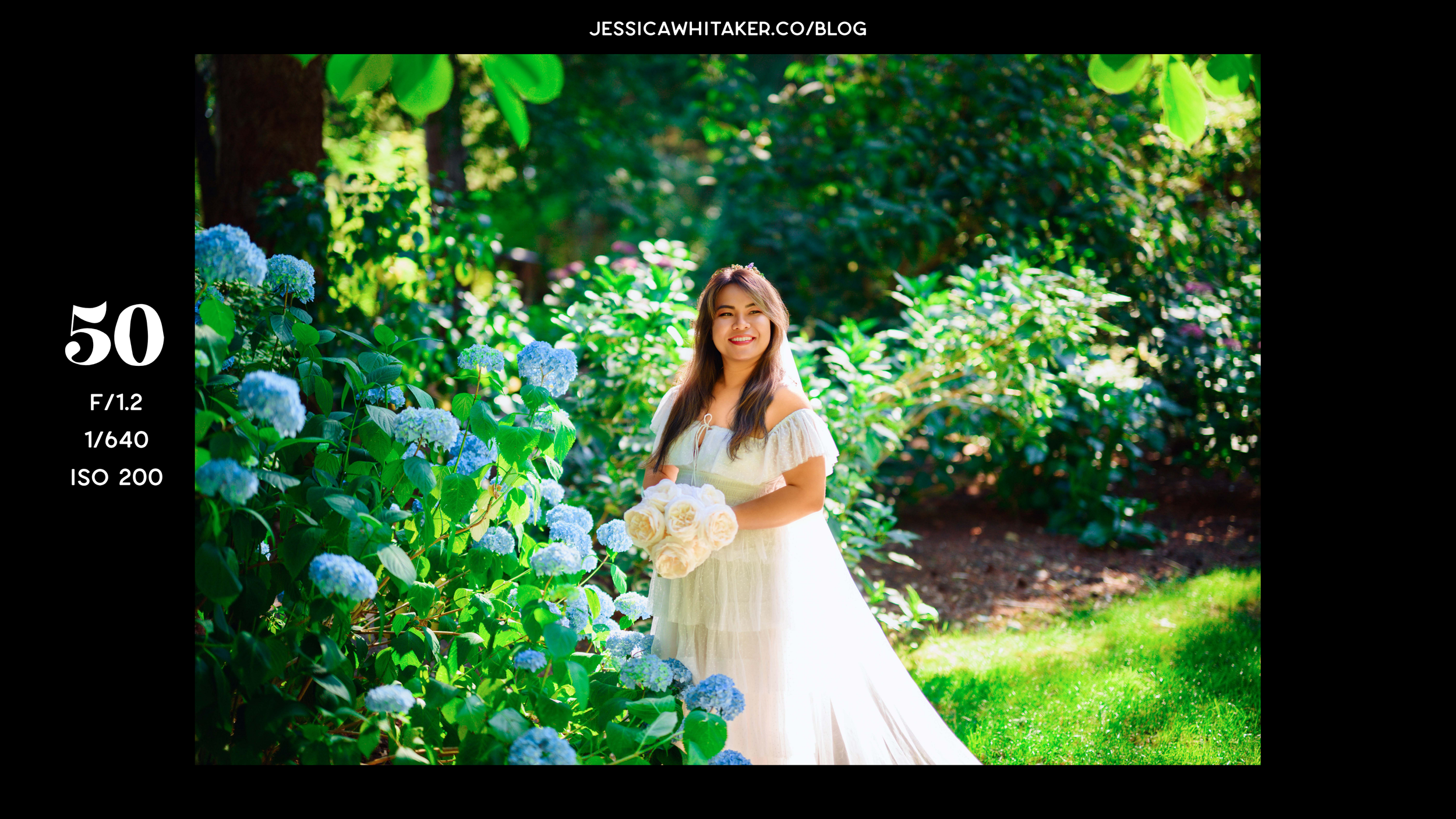
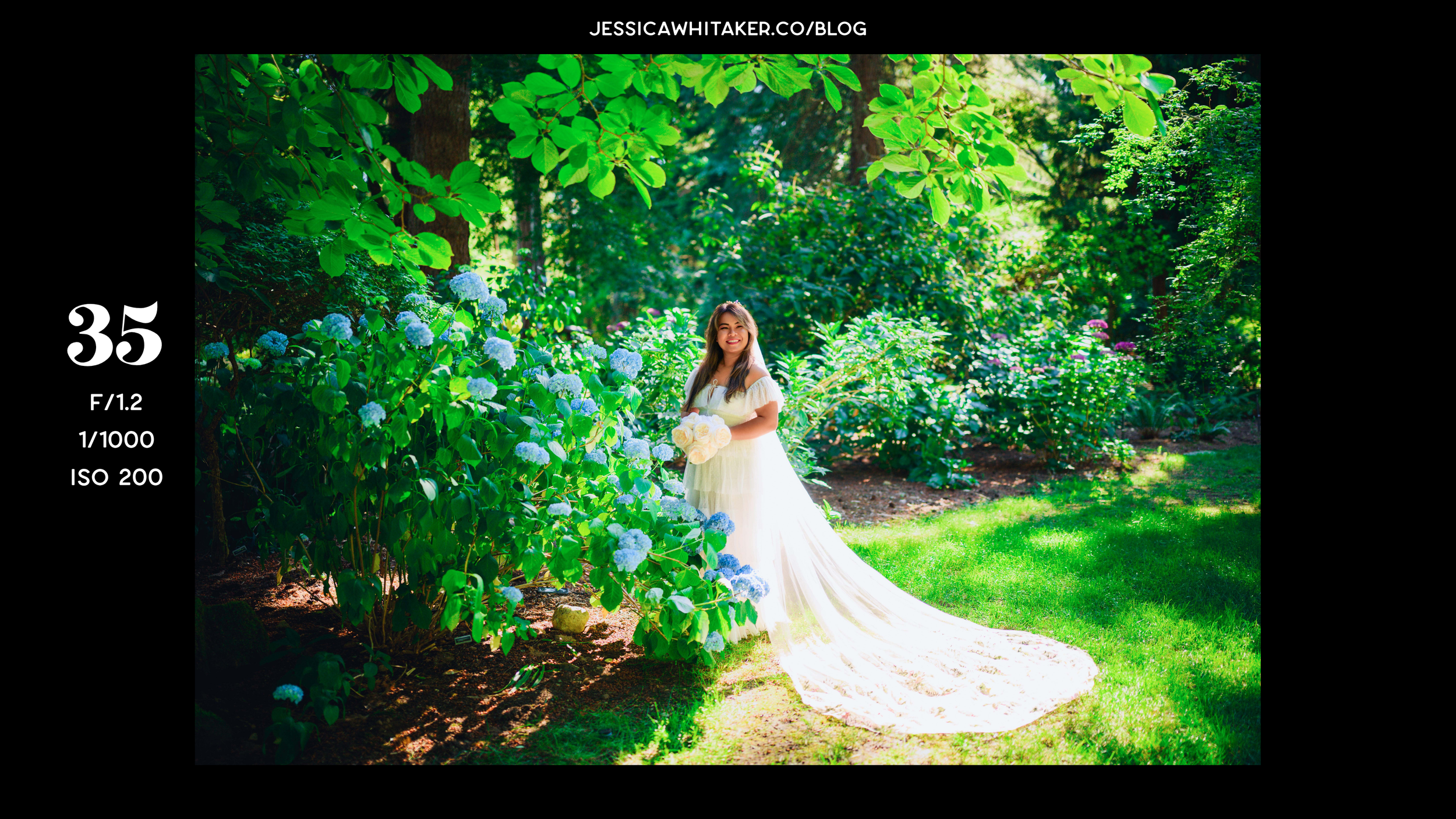
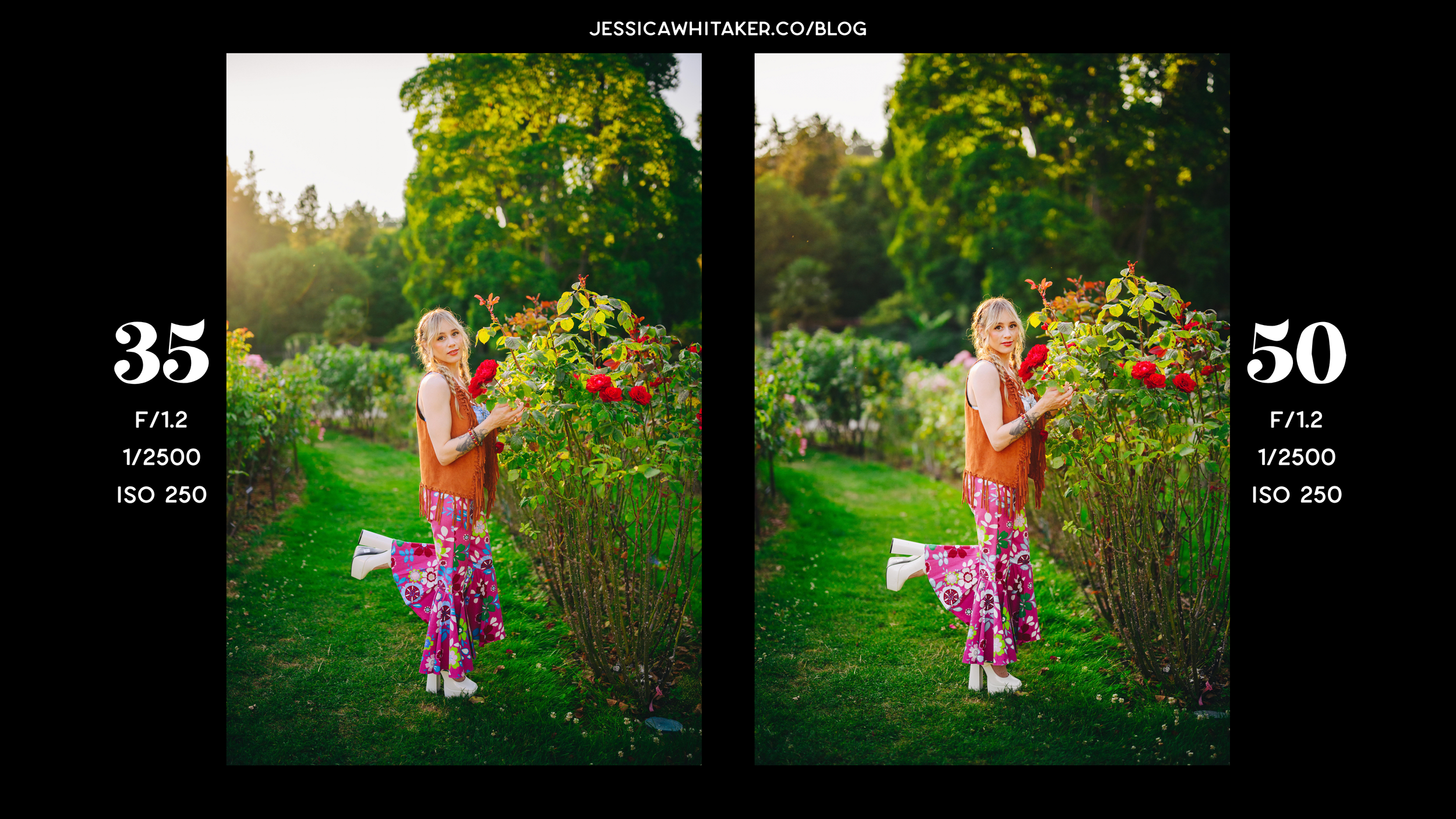
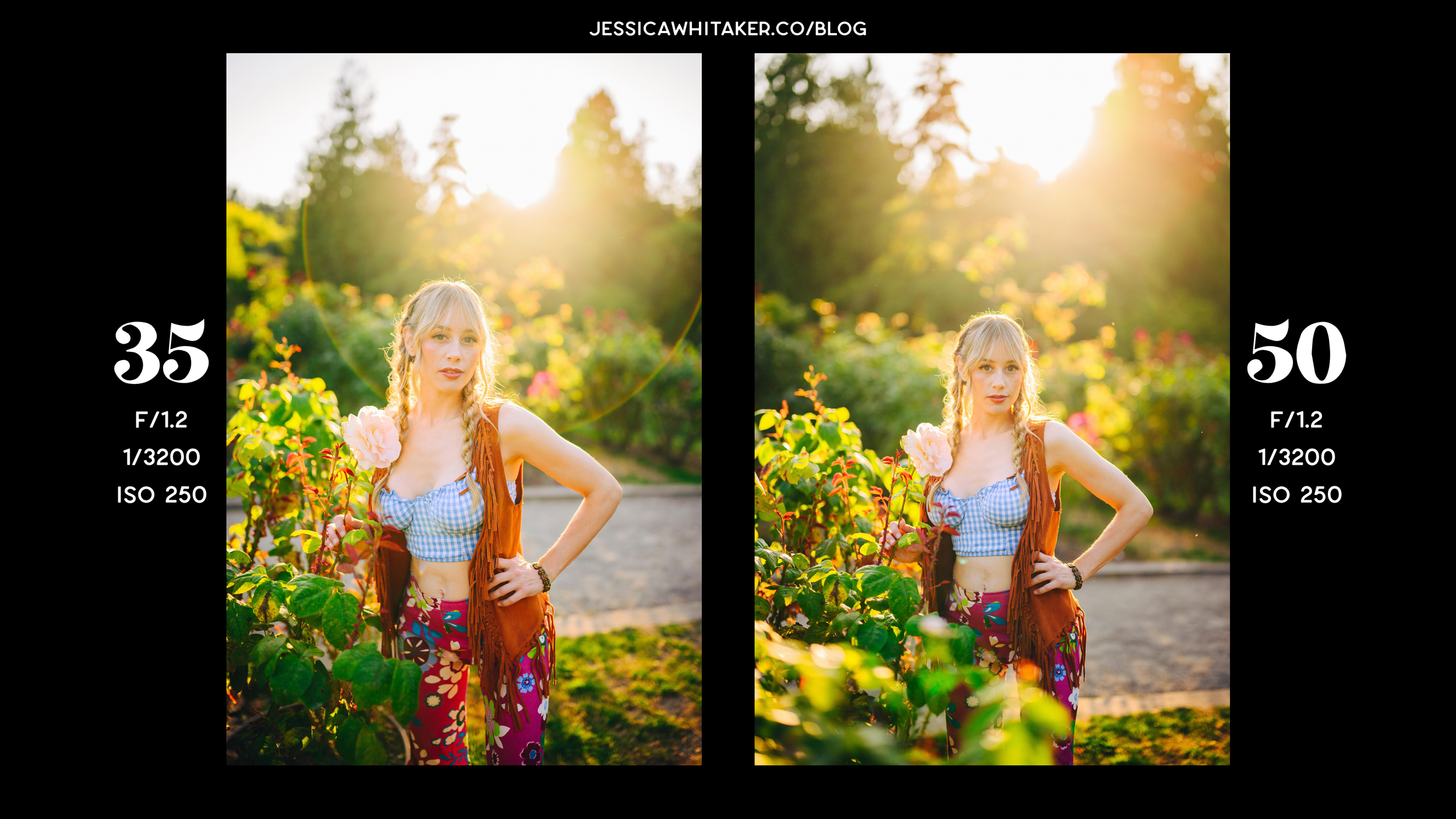
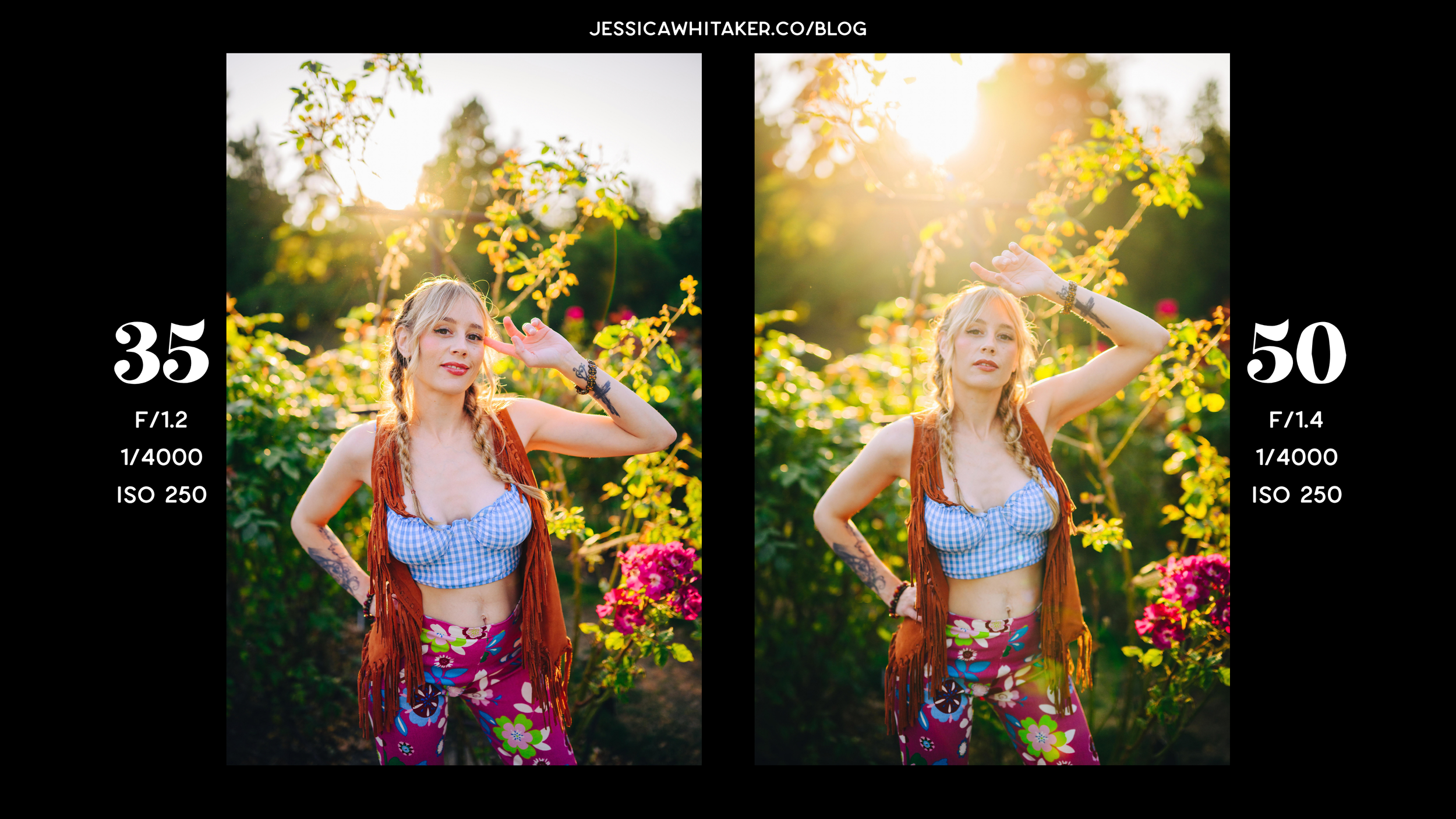
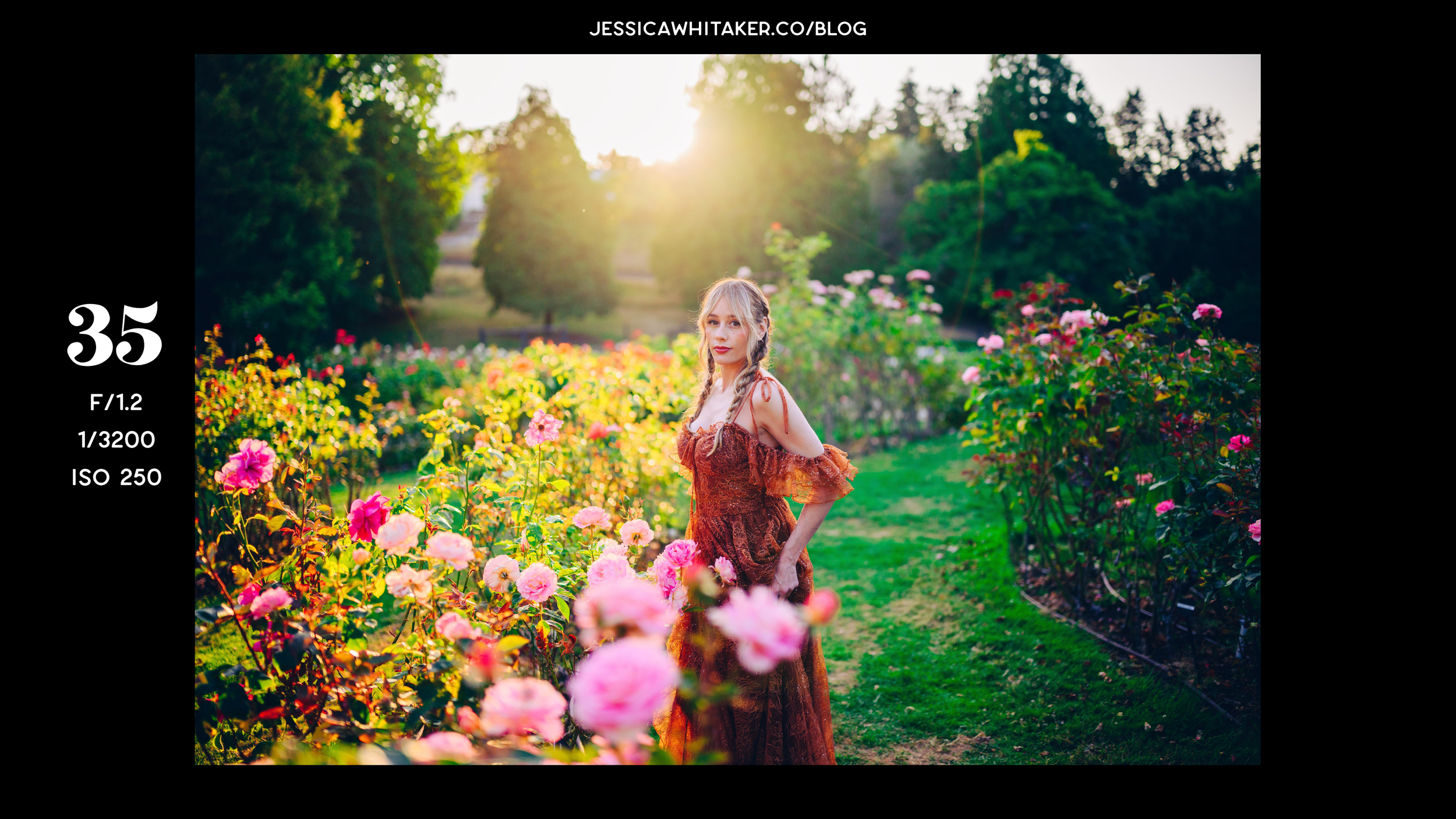
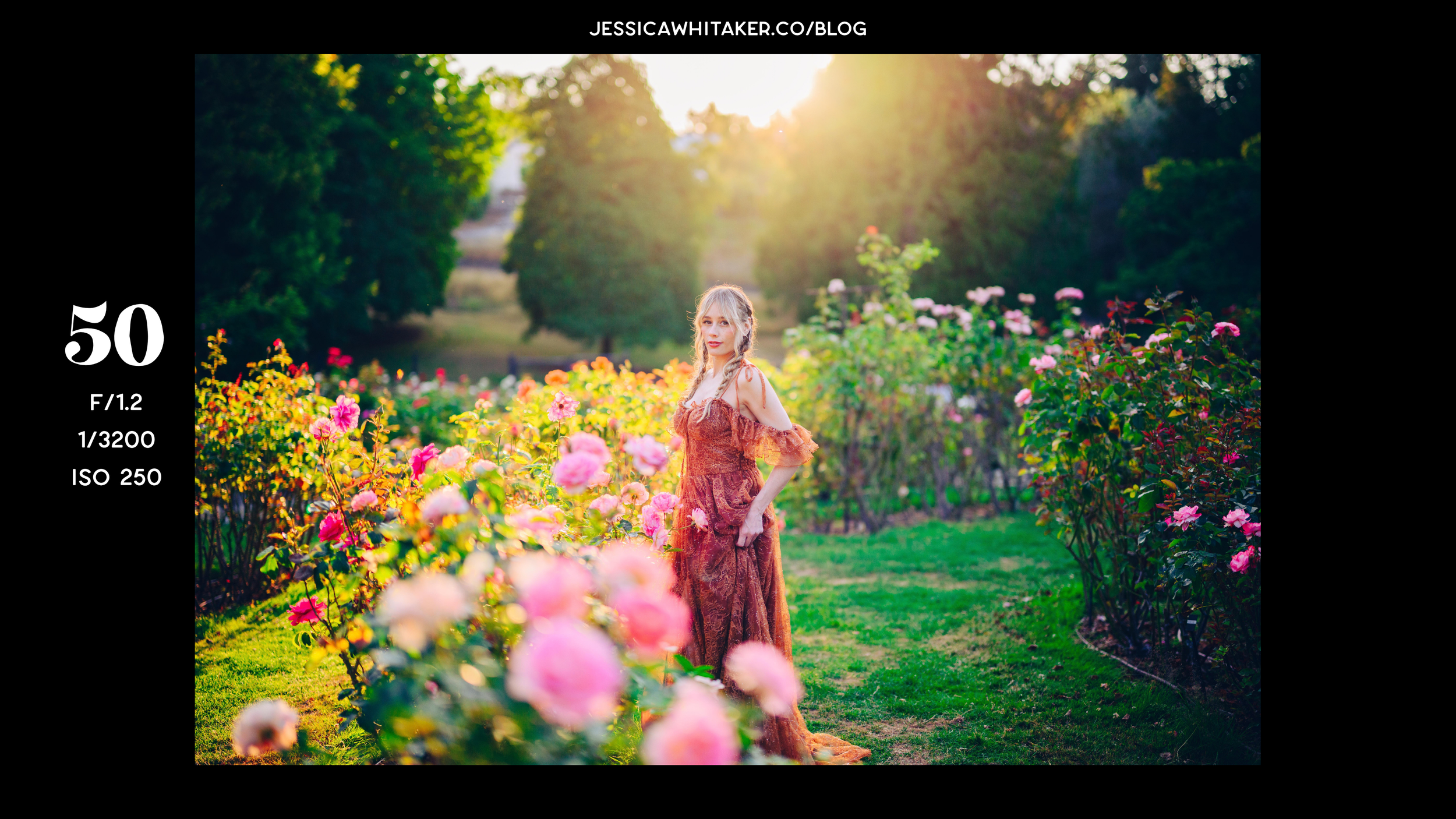
Below are more side-by-side sample images comparing the 35mm and 50mm. Some were taken from the exact same standing position to show the difference in field of view, and others keep my subject framed the same way to show the difference in compression and distortion.
Which Lens Should YOU Buy?
Who Should Buy the 50mm Prime Lens?
If you're drawn to a buttery, soft background with your subject isolated from what's behind them, the 50mm is where you should start. Because of its compression, less of the background is visible, so what holds your attention is the subject instead of the environment around them. It's versatile enough to cover portraits, detail shots, product and food photography, pet photography, newborn sessions, and so much more.
Who Should Buy the 35mm Prime Lens?
If you want the environment to be just as much a part of the story as your subject, the 35mm might suit you best. It's a great choice for lifestyle, travel, street, and documentary-style work, including documentary-style weddings, where the setting matters as much as the person in the frame. It's also the lens I reach for in tight spaces, like a small getting-ready suite or a branding client in a coffee shop, since you can capture the whole scene without backing into a wall. You'll still get a blurry background with a 35mm, it's just less compressed, so more of the environment shows through.
Think about the kind of images you want to create. If you're drawn to that soft, subject-isolated look, go with the 50mm, and if you want your images to feel more environmental, like they're telling a story about a place as much as a person, go with the 35mm. If you have questions about which lens is the best fit for your photography business, come ask in my free Build and Bloom Facebook group, which is a kind and encouraging place to get answers to your specific questions.
Frequently Asked Questions (FAQ)
Is a 35mm or 50mm lens better for portraits?
For most portraits, the 50mm is the more flattering choice because it has less distortion and more lens compression, which keeps your subject's proportions natural and gives you a softer background. The 35mm works well for environmental portraits where you want the setting to be part of the story, but it takes more intention with your camera angle and framing to avoid stretching your subject.
Does a 35mm lens distort faces?
A 35mm can make facial features look wider when you're photographing close up, especially if your subject is near the edges of the frame or your camera is tilted. Keeping your camera level and your subject closer to the center of the frame helps reduce this.
Is a 35mm good for wedding photography?
Yes, especially for documentary-style wedding photography and tight spaces like a small getting-ready suite. It's also a great lens for ring shots and for capturing the whole scene at a venue. Many wedding photographers keep both a 35mm and a 50mm in their bag since they serve different purposes throughout the day.
Should a beginner buy a 35mm or 50mm prime lens first?
For most beginners, the 50mm is the best first prime lens because it's the most versatile and it's affordable, with f/1.8 versions often under $200. If you mostly photograph lifestyle, travel, or tight indoor spaces, a 35mm could be a better fit for your work.
Why does a 50mm have a blurrier background than a 35mm at the same aperture?
Because a 50mm is a longer focal length, it has more lens compression, which magnifies the background and pulls it in toward your subject. That makes the blur look softer and creamier than a 35mm, even when both lenses are set to f/1.2.